

Animal Fat Rendering: Feed Grade vs Food Grade — Where the Line Actually Falls
Animal Fat Rendering: Feed Grade vs Food Grade — Where the Line Actually Falls
One cooker, one press, one tank — and yet one batch of rendered fat ships to a food plant while the next can only go to a feed mill. The difference is not how hard you cook it. Three hard boundaries do the deciding: whether the raw material is allowed into the food chain, whether the plant is built and cleaned to food hygiene standards, and whether the finished fat clears the mandatory limits for edible animal fat. In China the food-grade gate is GB 10146-2015, with acid value capped at 2.5 mg KOH/g and peroxide value at 0.20 g/100 g. Feed-grade fat is judged against feed-fat specifications, where the acid value cap is commonly 8 mg KOH/g. Miss the boundary in either direction and you either sell feed-grade fat as food, which is illegal, or you spend food-grade money on a line that was never allowed to make food.
1. This is not a quality ladder — it is two regulatory tracks
Edible animal fat sits inside the food safety system. In China that means GB 10146-2015, a mandatory national standard that fixes hard limits on acid value, peroxide value and malondialdehyde (summary of the GB 10146-2015 limits, Zoucheng Municipal Government, Aug 2026). Feed fat sits under the Feed and Feed Additive Regulations and the Feed Raw Material Catalogue, with quality judged against product standards such as Feed Fats — Animal Fats.
The EU splits the two even more cleanly: 853/2004 governs the food hygiene of fats, while 1069/2009 governs animal by-products, and fat destined for feed may only come from Category 3 material. Which is the point: feed grade is not the leftovers of food grade. It is a separate, fully legal product line. The traffic does not run free in the other direction either — food-grade fat sold into feed still has to meet feed catalogue and labelling rules, so it cannot simply be tipped into a trough.
2. Boundary one: the raw material decides the destination
GB 10146-2015 defines edible animal fat narrowly: lard, caul fat, mesenteric fat or pure fat adhering to organs, taken from inspected and passed pigs, cattle, sheep, chickens and ducks, and rendered. Five species, nothing else. Feed grade draws a much wider circle — fat tissue from healthy slaughtered animals and by-products fit for use, corresponding to EU Category 3 — while dead stock and high-risk material (Category 1–2) are barred from the feed chain outright.
The line is one-way. Once non-edible material enters the batch, that fat can only go to feed or industrial use, and no amount of explaining afterwards reverses it: veterinary certificates and batch records deal in documents, not in assurances.
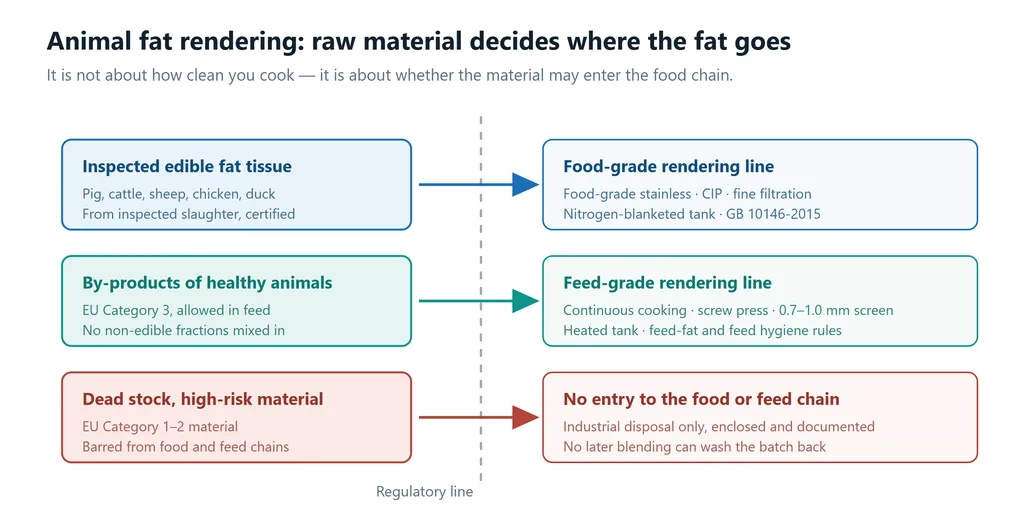
Figure 1 — Raw material decides the destination: edible fat tissue, slaughter by-products and high-risk material map to food grade, feed grade and no entry. Once non-edible material is in the batch, the fat can only go to feed or industrial use.
3. Boundary two: plant and process hygiene
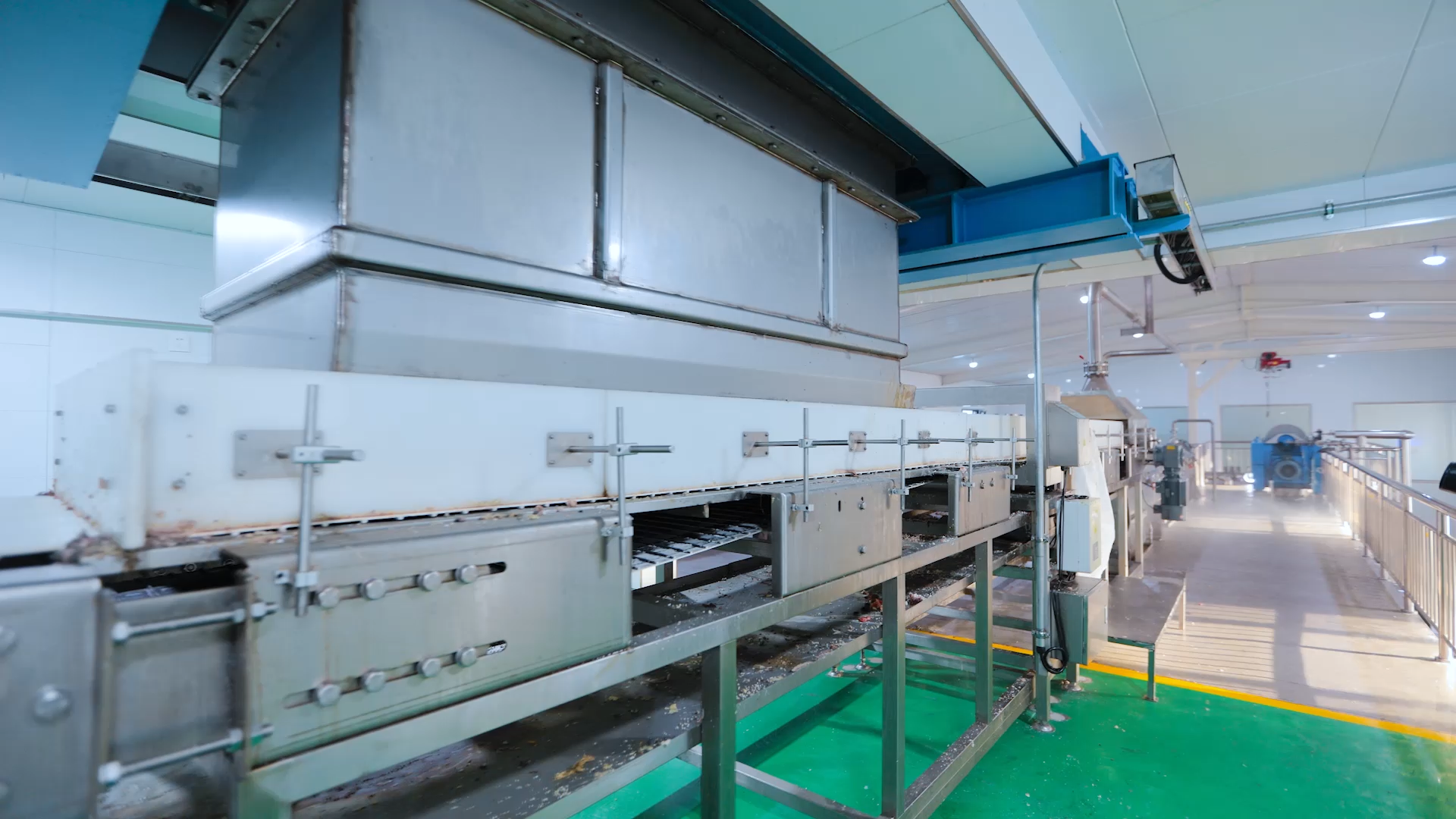
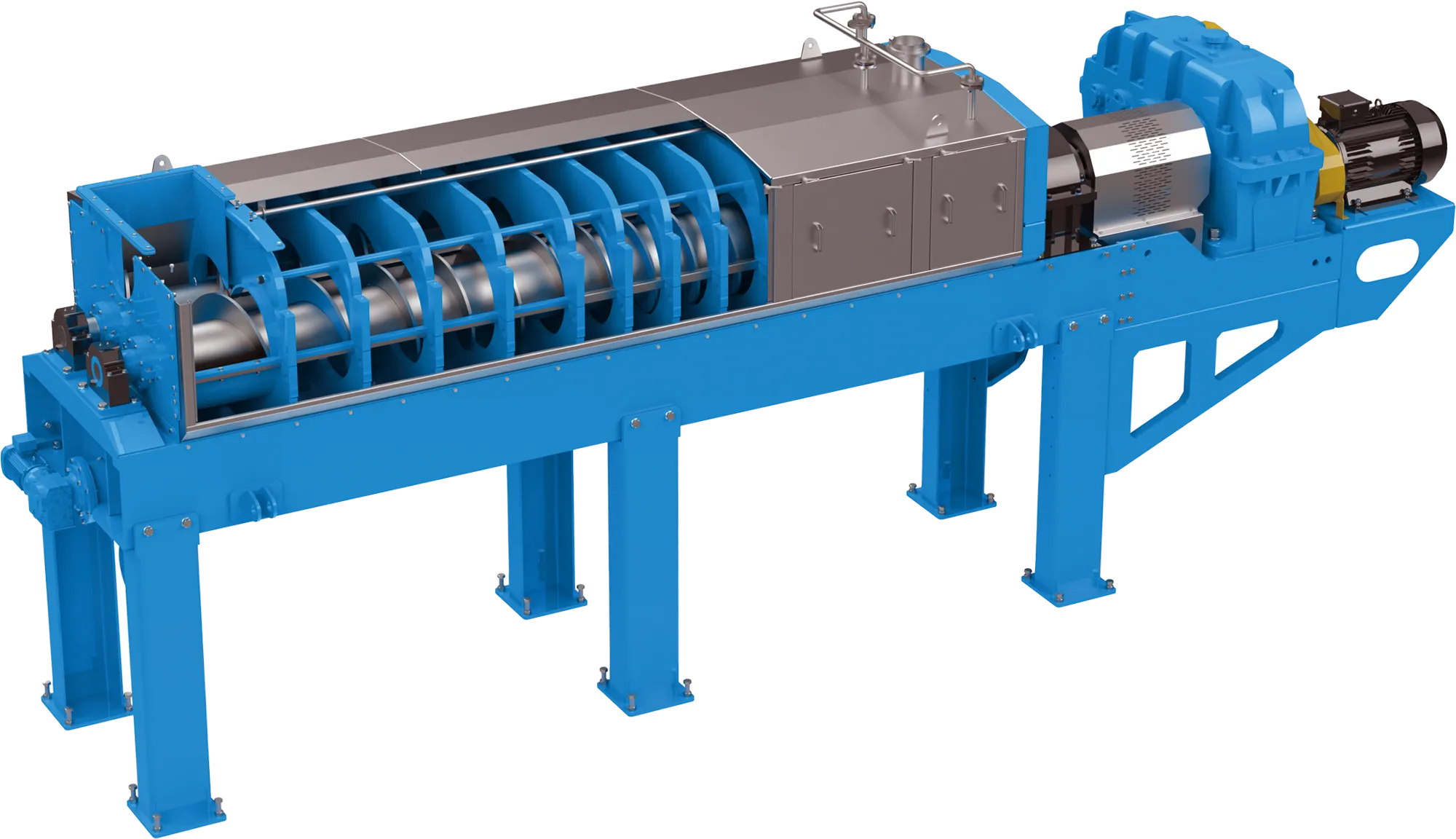
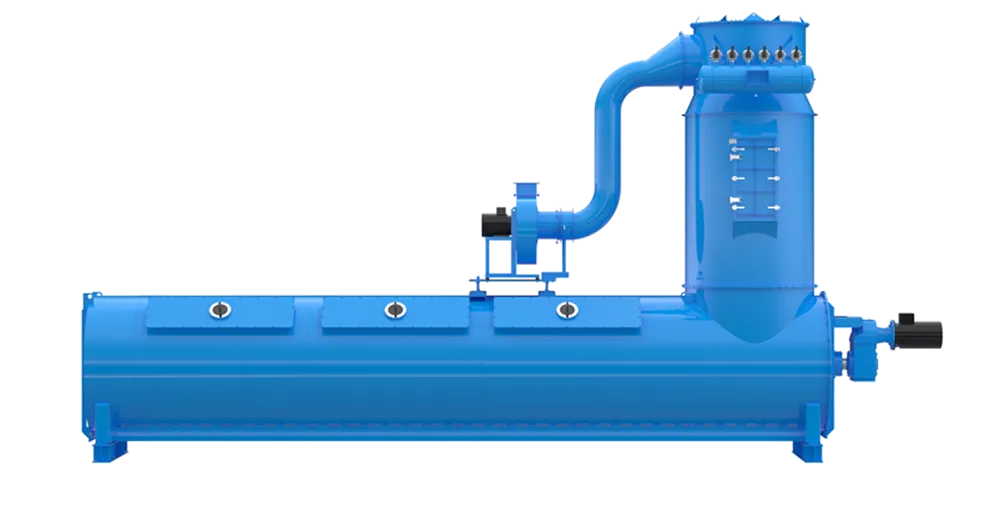
Both grades may run continuous cooking, screw press, filtration and storage tanks. What separates them is who the plant was designed for.
Food grade has to be built like a food factory: food-grade stainless contact surfaces, cleanable in place, segregated personnel and material flows, no raw-to-cooked crossover, logged cooking time and temperature, finer filtration and a tank that is nitrogen-blanketed to keep oxygen away from hot fat. Feed grade is optimised for yield and oxidation control instead: press the fat out after cooking, run it through a 0.7–1.0 mm vibrating screen for coarse filtration, and keep the storage tank heated and traced so it does not set solid in winter.
So the real question is never “can this equipment render edible fat”. It is whether materials, cleaning validation and records hold up in a food audit. When an old feed line is upgraded, the blockers are almost always cleaning validation and cross-contamination — not cooking temperature.
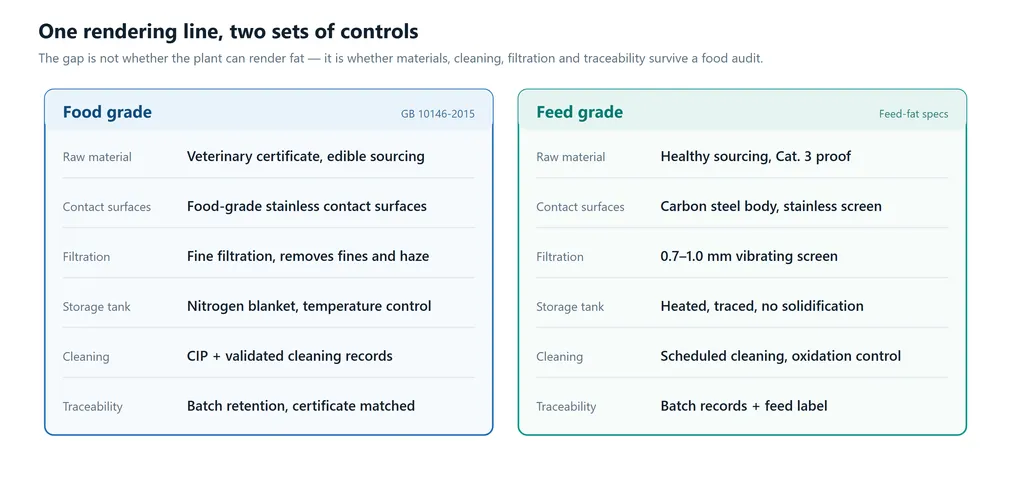
Figure 2 — One rendering line, two sets of controls: raw material, contact surfaces, filtration, storage, cleaning and traceability side by side.
4. Boundary three: the gap in finished-fat specifications
| Parameter | Food grade (GB 10146-2015) | Feed grade (typical Feed Fats — Animal Fats spec) |
| Acid value | ≤2.5 mg KOH/g | ≤8 mg KOH/g |
| Peroxide value | ≤0.20 g/100 g | ≤5 mmol/kg |
| Malondialdehyde | ≤0.25 mg/100 g | ≤5 mg/kg |
| Moisture and volatiles | Per product standard, usually ≤0.2% | ≤1.0% |
| Insoluble impurities | — | ≤1.0% |
| Unsaponifiable matter | — | ≤1.0% |
| Microbiology | Pathogens per GB 29921 limits | Total plate count ≤5×10⁴ CFU/g, pathogens absent |
The feed-grade figures follow the Feed Fats — Animal Fats specification commonly cited in Chinese feed-fat projects (see the environmental disclosure for one such project, Zongyang County Government).
Note that the two peroxide values are stated in different units, so they cannot be compared as written: 0.20 g/100 g converts to roughly 3.9 mmol/kg, which is still tighter than the 5 mmol/kg feed limit. Food grade is not a little stricter — it is stricter by an order of magnitude on the same chemistry.
5. Testing, retention samples and line changeover
Food grade means a retained sample from every batch, routine acid value, peroxide value and malondialdehyde, plus contaminants and microbiology, with each veterinary certificate matched one-to-one to a raw material batch. Feed grade means heavy metals and microbiology under the feed hygiene standard, and a finished label that says the product is for feed use.
Shared lines are where things go wrong. Switching tanks and pipework from feed grade to food grade requires a validated cleaning step and first-run testing. Residue from the previous batch is a compliance risk in the next one, and it is the first thing an auditor looks for.
6. FAQ
Is a passing acid value enough for food grade? No. Acid value only describes hydrolytic rancidity. Raw material origin, benzo(a)pyrene, heavy metals, microbiology and the production licence all have to line up; any one of them failing disqualifies the batch.
Can feed-grade fat be sold as food? No. Neither the raw material scope nor the hygiene conditions meet food requirements, and selling it as food is a prosecutable offence.
Can food-grade fat be fed to animals? Technically yes, provided it meets feed catalogue and labelling requirements. It rarely makes commercial sense.
7. The bottom line
For a rendering plant, the grade you make is a commercial position rather than a technical preference: the raw material you can secure decides which grade is open to you, and plant design plus testing capability decide whether you can hold it. Sunrise builds complete lines for fish meal, meat and bone meal, feather meal and rendered fats — from continuous cooking through pressing and filtration to storage — and configures contact materials, filtration rating and tank design around the grade you are targeting. If you want to know whether an existing line can be upgraded to food grade, send us your raw material mix and target specification.