

How a Meal Cooler Works in a Rendering Production Line
How a Meal Cooler Works in a Rendering Production Line
A meal cooler — also called a powder cooler or cold air cooler — sits between the grinder and the packing line. It takes meal that leaves the hammer mill at roughly 80–100 °C and brings it down to within 5–8 °C of ambient before it is bagged or blown into a silo.
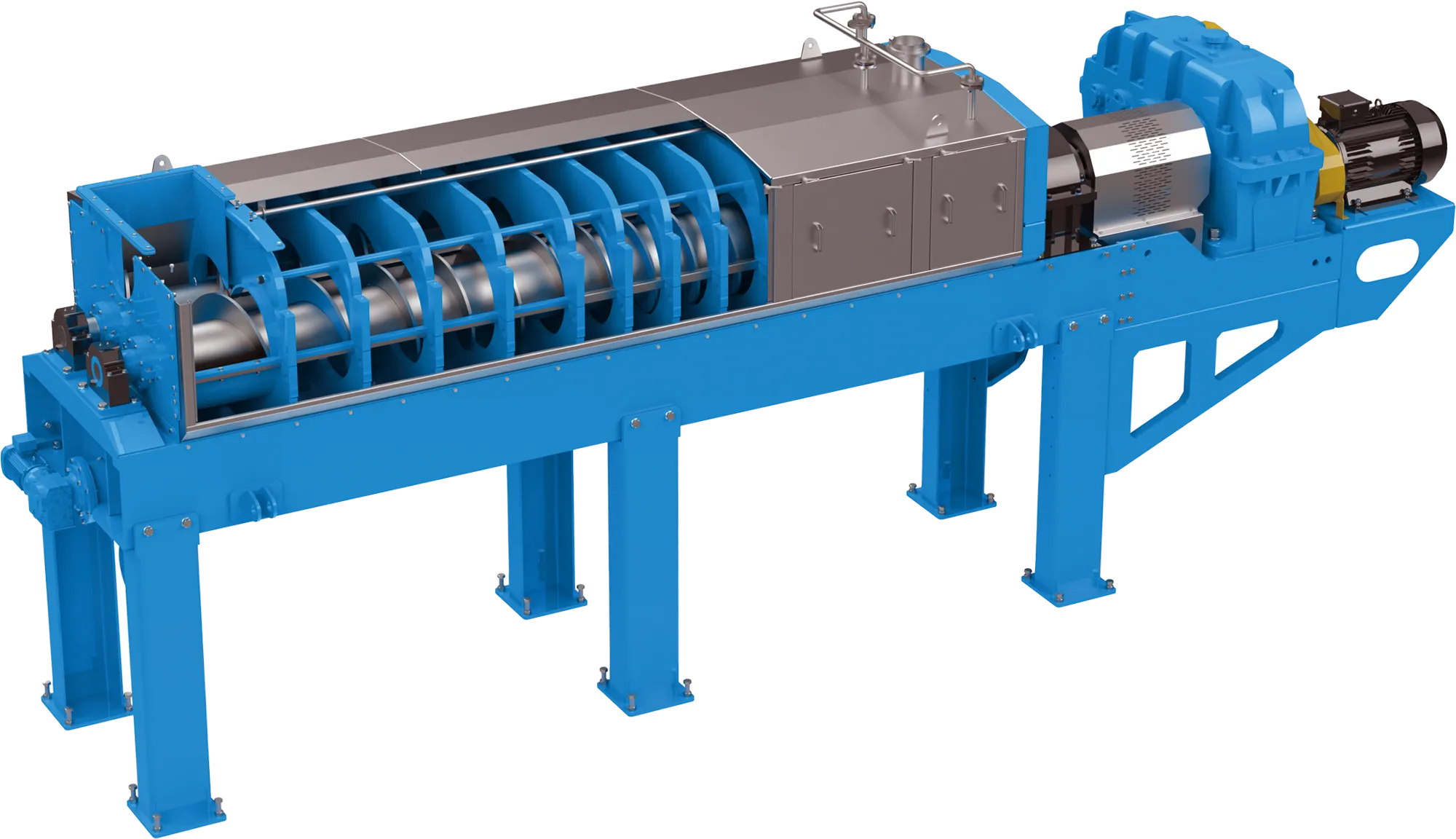
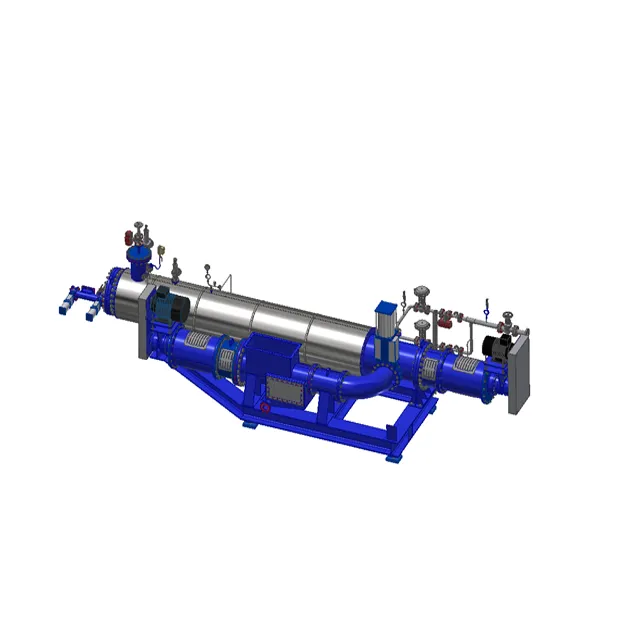
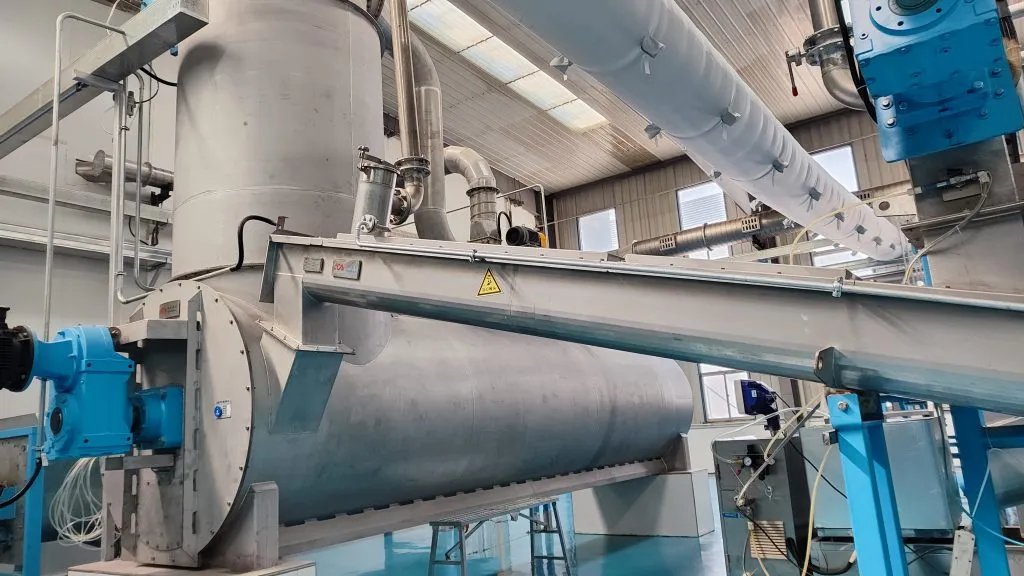
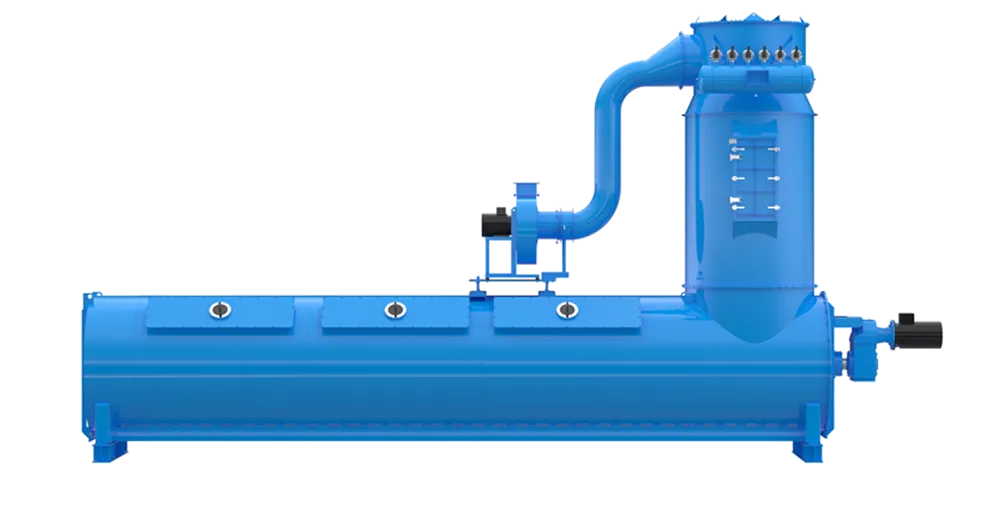
The principle is counter-flow air cooling. Hot meal is pushed slowly along a horizontal drum by low-speed paddles while cooling air is drawn through the same drum in the opposite direction. The coolest air meets the coolest meal, the warmest air meets the hottest meal, and the dust-laden exhaust is filtered before it leaves the building. Nothing is added; the product simply arrives at the bag at a temperature that will not sweat.
Why the cooling step exists at all
Meal packed hot keeps its heat. A 25 kg bag is an insulated container: the core can stay above 60 °C for hours while the outside feels only warm. As the bag slowly loses heat, moisture migrates outward and condenses on the cooler inner wall. Within days come the familiar problems — caking, a sour smell, mould, and a shelf life measured in weeks instead of months. Fat oxidation speeds up at the same time, and so does the risk of a hot spot in a silo. Trade guidance puts the packing threshold at “within five degrees Celsius of ambient” for exactly this reason, as International Pet Food notes. We covered the storage side in why meal must be cooled before bagging; this article is about the machine.
Step by step through the cooling cycle
- Meal enters from the mill. Ground meal drops from the milling plant into a screw conveyor and is fed into the cooler inlet at a steady rate. Even feed is what makes even cooling possible.
- Paddles move it forward slowly. A rotor with agitating arms turns at about 24 rpm on Sunrise LF models, lifting meal and dropping it back through the air stream, so it advances a little with each revolution.
- Cooling air travels the other way. A centrifugal fan at the air-outlet end pulls ambient air through the drum, against the meal flow. That air has already picked up heat by the time it reaches the inlet end, so the incoming meal never meets a cold shock.
- Particle size is preserved. High shear at this stage would break the meal down further and create fines. Slow paddles move the product without grinding it.
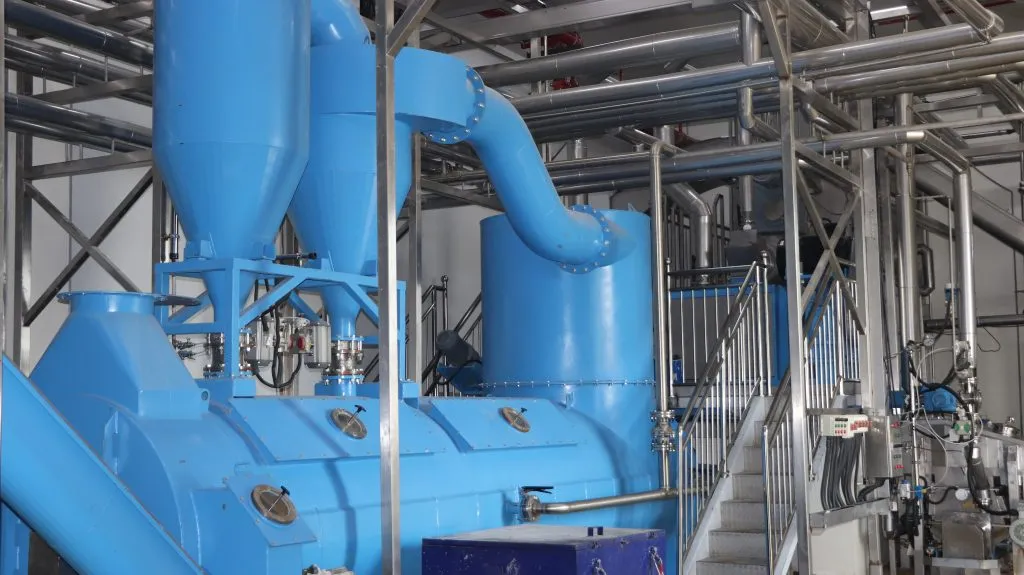
- Dust is captured, not emitted. The hot exhaust passes through a bag filter — or a cyclone ahead of it — before the fan discharges it. Captured fines return to the product stream instead of settling on the roof.
- Meal leaves at storage temperature. Typically within 5–8 °C of ambient, around 30–35 °C in most climates, ready for silo storage or bagging.
What changes downstream
- Shelf life. No internal condensation, so no caking and no mould; the declared shelf life holds in the customer’s warehouse.
- Storage risk. Silos stay below the self-heating threshold — a fire risk as much as a quality risk.
- Consistency. Every batch leaves at the same temperature, so bagged and bulk product behave alike.
- Fines and dust. Low-speed handling plus filtration keeps the plant cleaner and cuts product loss.
The numbers that decide whether it works
| Parameter | Target | Why it matters |
| Meal in | 80–100 °C | Sets the heat load the drum has to remove |
| Meal out | ambient +5–8 °C | Below this, condensation inside the bag is avoided |
| Rotor speed | ~24 rpm | Moves product without reducing particle size |
| Retention time | set by paddle angle | The main lever on final temperature |
| Air volume | matched to throughput | Too little air leaves a hot core |