

Fish Meal Presses: Single-Screw vs Twin-Screw Designs
Fish Meal Presses: Single-Screw vs Twin-Screw Designs
For a commercial fish meal line running fatty, seasonal, variable raw material, a twin-screw press is usually the better buy: the intermeshing screws keep their grip on slippery cooked fish, deliver a drier cake at lower screw speed, and put less shear into the liquor. A single-screw press is still the right answer for small lines, steady single-species feedstock, and plants where the press is not the bottleneck. The reason comes down to slip, and to where the water you fail to remove ends up paying for itself.
Key takeaways
- Intermeshing screws cannot let material rotate with them, which is why a twin-screw press keeps its grip on slippery fatty cooked fish where a single screw slips and produces wet cake.
- Cake moisture is a steam decision: every point of water the press leaves in the cake is water the disc dryer must boil off, so a weak press shows up in the steam bill rather than in the press room.
- Size the press on the lean end of your season and ask for the fat range across species, because a press sized for the peak week runs starved and starved presses make wet cake.
- If cake moisture can only be held by tightening the cone month after month, the press is wearing out, not improving, and the cone position log will tell you before the cake does.
- Specify cake moisture and acceptable solids in press liquor before requesting prices, then compare every offer against your own worst week of raw material.
The press is where your dryer’s steam bill gets decided
A screw press sits between the cooker and the dryer, and nothing downstream is indifferent to what it does. Cooked fish leaves the cooker as a slurry of solids, oil and water. The press splits that mass into press cake going forward to drying and press liquor going to the decanter and then the evaporator. Get that split wrong and both machines pay for it.
Every point of moisture the press leaves in the cake is water the dryer has to boil off. That is why a weak press rarely announces itself as a press problem. It shows up as steam consumption, as a dryer that cannot keep up, as a cake that scorches on the outside while still wet at the core. A steam bill that climbs year after year is often one worn discharge cone away from being fixed, as we set out in rendering plant energy consumption and steam cost control.
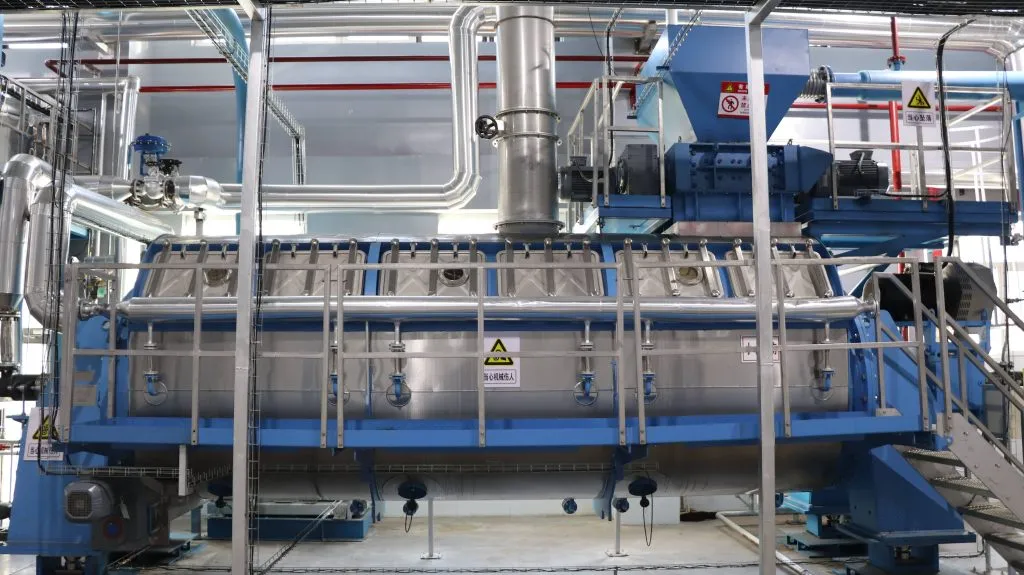
The Jiangsu Sunrise disc dryer downstream of the press is indirect steam heated and built for continuous drying of animal by-products and fish. Its drum head, scraper blades and fans are sized around a moisture load the press has already decided. A complete fish rendering plant is a chain in which the cheapest component can set the duty of the most expensive one.
Two further numbers come out of the same machine. Fat left in the cake is yield loss today and an oxidation problem in storage later. Solids and fines pushed into the liquor are evaporator load, and evaporator capacity is expensive to add. Fish makes all of this harder than poultry offal: it is softer, wetter and fattier, and its fat content swings with species and season. Soft fatty material slips, and slipping is precisely the failure mode that separates press designs. So the single versus twin question is a question about water and uptime, not about which machine sounds more advanced.
How a screw press pulls water out of cooked fish
Strip away the catalogue language and a screw press does one thing: it squeezes liquid out of a mass by restricting how fast that mass can leave. Every design choice in the machine serves that restriction.
- Feed. Cooked mass enters at the feed box and a screw conveys it forward through a screened cage.
- Build compression. Three mechanisms do this: decreasing pitch between flights, a shaft root diameter that increases along the length or a tapered shaft, and a discharge cone or choke at the outlet.
- Form a plug. Liquid escapes sideways through the screen cage while cake builds a plug against the cone. The plug generates the back pressure that squeezes water out. No plug, no pressure.
- Work three levers. Cone pressure, screen slot size, and screw speed or feed rate. Everything else is fixed at the design stage, which is why operating choices are limited and buying choices are not.
Feeding discipline decides more than the design
Starve the press and compression collapses: the cage stays part full, the plug never forms, and cake leaves wet. Flood it and solids blow through the screens while drive current climbs. Both outcomes get blamed on the machine, and both are feeding problems. The press wants a steady, full feed, which means the conveyor or pump ahead of it has to be capable of delivering one.
The press cannot repair bad cooking
Unevenly cooked or undercooked mass holds water inside cell structure and will not release it whatever the cone is doing. Judge press performance and cooker consistency in fish rendering together, because a press that looks weak is often being fed material a continuous cooker did not finish.
Single-screw presses: simple, cheap, and honest about their limits
One screw has to convey and squeeze at the same time. That single constraint explains both the appeal of the design and its ceiling.
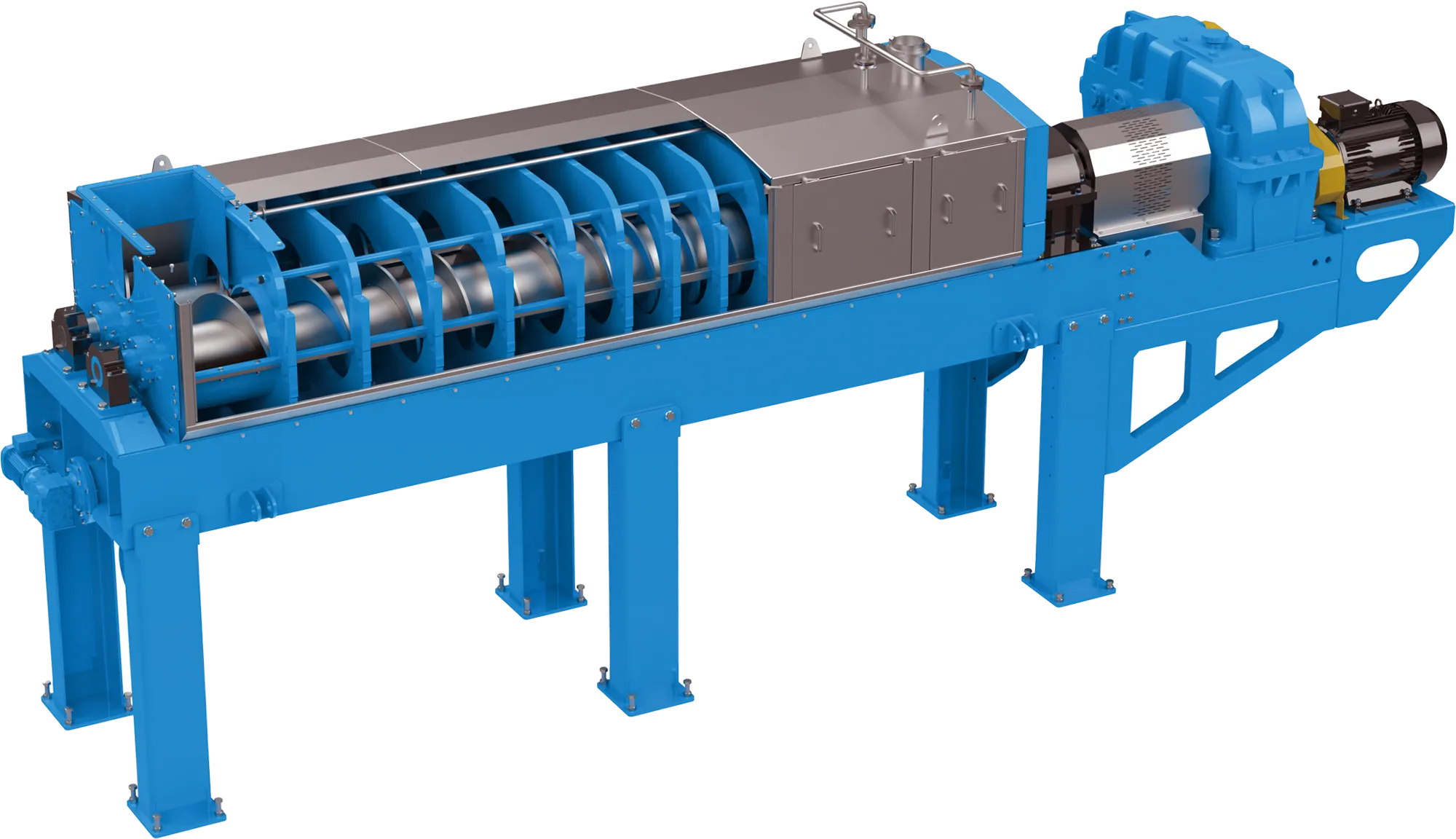
Typical layout: a tapered or variable-pitch screw inside a screened cage, a discharge cone at the outlet, one gearbox, one set of bearings. Fewer components than a twin, and every one of them is reachable by a fitter with ordinary tools.
Where it wins
- Fewer wear parts and cheaper spares, held in smaller numbers.
- Wide, open screens that are quick to inspect and change.
- Tolerance of coarse debris such as bone fragments and heavy scale.
- A machine a competent local workshop can rebuild without a factory engineer on site.
Where it stops
The limit is slip. On soft, fatty cooked fish a single screw can rotate the mass with it instead of pushing it forward. The plug loosens, compression falls away, and cake comes out wet regardless of cone setting. Operators answer by tightening the cone, which raises drive current and pushes fines into the liquor without restoring grip.
More capacity means a larger diameter or a faster screw, and a faster screw means more shear. Shear works against liquor quality: it emulsifies fat and generates fines the decanter then has to handle. Screen blinding compounds it. Fine fatty material seals the slots, liquor level rises inside the cage, and the cake leaves wetter because it is sitting in its own liquid.
Good fit: smaller lines, a steady single-species feedstock, and plants where the press is not the constraint because the cooker, the dryer or raw fish supply already caps throughput.
Twin-screw presses: two intermeshing screws that grip instead of slip
Two counter-rotating screws sit side by side in a common housing and intermesh. Each screw wipes the flights and root of the other as it turns.
That wiping action changes the physics. Material cannot ride around with the screw because the second screw is in the way. It gets forced forward instead. Grip survives on slippery fatty fish where a single screw loses it, and the press keeps compressing at cone settings that would only smear material in a single-screw machine.
Why the lower screw speed matters as much as the second screw
The same throughput is spread across two smaller screws turning slower. Lower peripheral speed means less shear at the flight tips, so less fat is emulsified into the press liquor and fewer fines are generated. The decanter receives a liquor that separates more cleanly, and the evaporator receives less solids load. Two screws also present more open screen area in the same floor space, which matters exactly when the cage is under load from wet material.
At the same cone setting the practical result is a drier cake and a cleaner press liquor, so the dryer burns less steam per tonne of meal and the evaporator runs further below its limit.
The bill that arrives with it
Two gearboxes or a heavier split drive, more bearings, more seals, higher capital cost, and a cage that needs more space and more skill to open and rebuild. Wear is also less forgiving. Unevenly worn screws fight each other instead of cooperating, so a tired twin press can behave worse than a healthy single press of similar nominal capacity. Condition monitoring on a twin matters more, not less. Buy a twin for grip and low shear, and go in knowing that you have bought a machine that rewards attention.
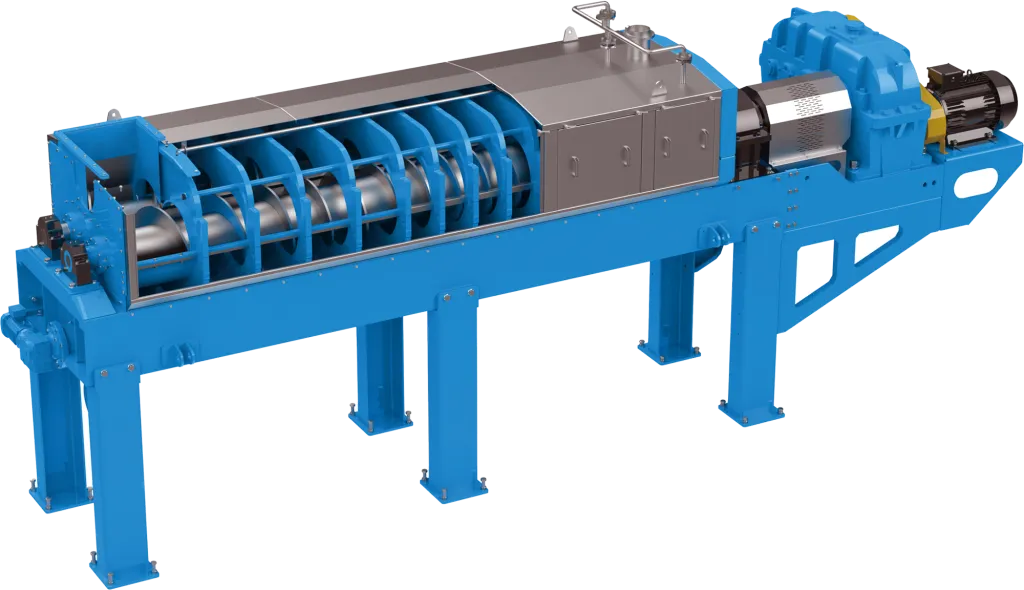
Single vs twin screw for fish meal: the comparison that actually decides it
Read the table as a set of plant outcomes rather than a features list. Every row is something you will live with for the life of the machine, and several of them land on equipment other than the press.
| Decision factor | Single-screw press | Twin-screw press |
|---|---|---|
| Throughput per floor area | Lower | Higher, two screws in one housing |
| Cake dryness on soft fatty fish | Inconsistent, prone to slip | Consistent grip, drier cake |
| Fat left in press cake | Higher when material slips | Lower, better drainage |
| Solids and fines in press liquor | Higher at elevated screw speed | Lower, gentler conveying |
| Tolerance of seasonal swings | Narrow, prefers one steady species | Wide, lean through fatty |
| Shear put into the liquor | Higher, faster single screw | Lower, two slower screws |
| Wear parts and spares | Fewer parts, cheaper spares | More drives, bearings and seals |
| Capital cost | Lower | Higher |
| Best fit | Small steady line | Commercial, variable fatty raw fish |
The crossover is honest and predictable. The twin-screw advantage grows with throughput and with feedstock variability, and it shrinks toward nothing on a small, steady line where the press never becomes the constraint. Paying twin-screw money for a press that runs four hours a week on one species buys you nothing you will notice.
Neither design rescues a badly sized or badly fed press either. Read this table together with the sizing section, because a well-chosen twin starved of feed will still hand you wet cake.
Sizing the press to your fish, not to a brochure tonnage
Any tonnes-per-hour figure in a brochure comes attached to a reference raw material. Yours is almost certainly not that material.
- Quoted tonnage tracks the reference fish. Real capacity moves with fat content, freshness and cook quality, so treat a single number as the opening of a conversation, not the answer.
- Know what physically sets capacity: screw diameter, pitch, screw speed, compression ratio and the open area of the screen cage. Nothing else in the machine changes throughput.
- Size on the low end of your season, not the peak. A press sized for your best week runs starved for the rest of the year, and a starved press makes wet cake. Sizing for the lean month and working the cone harder at peak usually beats a machine that never fills.
- Ask for the fat range, not a point. A press that holds cone pressure on lean fish can slip on fatty fish in the same week, so the specification has to cover the span.
- Match the feed chain. The Lamella material pump feeding the press and the conveyor ahead of it each have their own capacity curve, and screw conveyor capacity is determined by diameter, pitch and speed. A matched chain beats one well-chosen machine.
- Set two acceptance numbers first: required cake moisture and throughput range. Have the press sized against both, then compare offers.
Particle size belongs in the same conversation. A pre-crusher or prebreaker upstream sets what the cooker and the press actually see, and oversized lumps cook unevenly and reach the press as material that will not compress.
Take a plant that buys on the quoted peak tonnage and then spends the season running at a fraction of it. Cake comes out wet, the operator tightens the cone to compensate, drive current climbs, and the dryer still cannot keep up. Nothing was wrong with the press. It was sized for a week that happens once a year.
Running it right: cone pressure, screen slots and wear
Cone pressure is the main quality lever, and it is also the most commonly abused one.
- More restriction, more compression. A tighter cone means a drier cake, up to the point where solids blow through the screens or drive current climbs past what the motor is comfortable with.
- Tightening the cone hides a worn press. If cake moisture can only be held by raising cone pressure month after month, you are not improving the machine, you are compensating for it. Measure the wear instead of turning the handle further.
- Know what wears. Screw flights, the discharge cone and the screen cage. Abrasive scales and bone grind the slot edges open, and widened slots let fines straight into the liquor where they cost you at the decanter.
- Metallurgy decides whether the cage survives. Fish liquor and saltwater are aggressive, and chloride service is where the cheapest stainless grade fails first. Specify wetted-parts material at the buying stage, not after the first cage failure.
- Separate press faults from cooker faults with four checks: cake moisture, solids in the press liquor, drive current, and whether cake leaves the cone evenly across its face. An uneven exit points upstream, at feed or cook.
- Buy access, not just capacity. Split cages and quick-release screen clamping turn a screen change into routine maintenance instead of a lost production day.
Wear is gradual and therefore easy to miss. Keep a simple log of cone position against cake moisture and the trend tells you when the press is finished long before the cake looks obviously wrong.
One press or two, and what harder pressing costs downstream
A press removes free liquid. Water held inside intact cell structure has a floor below which no cone setting will take you, and that floor is set by cooking quality, not by press force.
Second-stage pressing buys cake dryness with mechanical energy rather than steam, and steam is usually the more expensive way to remove the same water. That is the argument for a second press in series: you trade a capital item and some maintenance for a permanent reduction in dryer duty.
The cost is paid downstream. Pressing harder squeezes more solids and fines into the liquor, and that load lands on the decanter and then on the evaporation concentration system. If the evaporator is already near its limit during peak season, a harder-pressing upgrade moves the bottleneck rather than removing it.
Oil recovery sits in the middle of this trade. More shear and more fines make fat harder to separate cleanly, and fat left in the cake is lost yield plus a future oxidation problem, which is why fish meal oxidation control and storage discipline starts with press performance. A fat press downstream can only recover what the decanter and liquor circuit let it see.
Decide with three numbers you can measure on your own line: cake moisture, solids in the press liquor, and dryer steam per tonne of meal. Run them for a week, change one thing, run them again. That comparison settles the argument faster than any vendor claim, and it tells you whether your money belongs in a second press or in a bigger dryer.
What to put in your specification before you ask for a quote
Most press quotes are incomparable because the specification behind them was vague. Fix that first and the offers fall into line.
- Describe the raw material range, not the average: species, fat and moisture range across the season, freshness window, and operating hours per week.
- State two acceptance numbers up front: required cake moisture and acceptable solids in the press liquor. Both are testable, and both force a real sizing exercise.
- State utilities and metallurgy: steam, power and water available, plus the stainless grade required for wetted parts, so every offer is priced against the same materials.
- Ask what wears and what it costs: wear part prices and lead times for a spare cage, screw and discharge cone. A press with no spares pipeline is a shutdown waiting for a date.
- Ask how the cage opens and what clearance around the machine that needs, because access decides how maintenance actually goes in year three.
- Ask which reference feedstock the quoted capacity is based on, then compare every offer against your own worst week rather than the brochure.
Sunrise builds complete fish meal plant machinery covering cooking, pressing, drying and evaporation, and has been supplying rendering plant processing equipment for 30 years as a comprehensive environmental protection technology company. Send the raw material range and the cake moisture target, and the press can be sized against your fish rather than a reference number.
Frequently asked questions
What cake moisture should I specify for a fish meal press?
Specify a target you can measure on your own raw material rather than a brochure figure. Cake moisture depends on species, fat content, freshness and cook quality, so the honest specification is a test: name the sampling point, name the drying method used to measure it, and state which raw material the number applies to. Then require the figure to be demonstrated on your fish during acceptance.
Can one press handle both lean and fatty fish in the same season?
It can, provided the press was specified across the fat range rather than at one point. Lean material holds cone pressure easily, while fatty material is the case that causes slip. Ask every supplier which feedstock the quoted capacity refers to, and check that the compression ratio and drive power were chosen for your fattest week, not your average.
What drives the price difference between single-screw and twin-screw presses?
The gap comes from the second screw, the heavier drive arrangement, and the extra bearings and seals that go with them. Twin-screw machines also cost more to rebuild when screws wear unevenly. The real question is not the price gap but the lifetime cost: a drier cake cuts dryer steam, and cleaner liquor cuts evaporator load, so the cheaper press can end up costing more per tonne of meal.