
Rendering Temperature Guide for Animal By-Product Processing
Rendering temperature drives three outputs that matter in animal by-product processing: fat yield, meal quality, and operational stability. The goal is not maximum heat. Use temperature to melt fat, remove water, and limit avoidable protein damage.
This page explains stage targets, what happens when temperature runs too low or too high, and how to stabilize results.
Key temperature ranges
- Typical batch cooker end-point for many dry rendering loads: 115°C to 140°C
- Lower-moisture fat-and-bone materials often finish around: 105°C to 125°C
- Feather hydrolysis often uses staged zones: 120–135°C, 140–155°C, and above 160°C
Use these as starting points, then tune with moisture load, residence time, and downstream separation behavior.
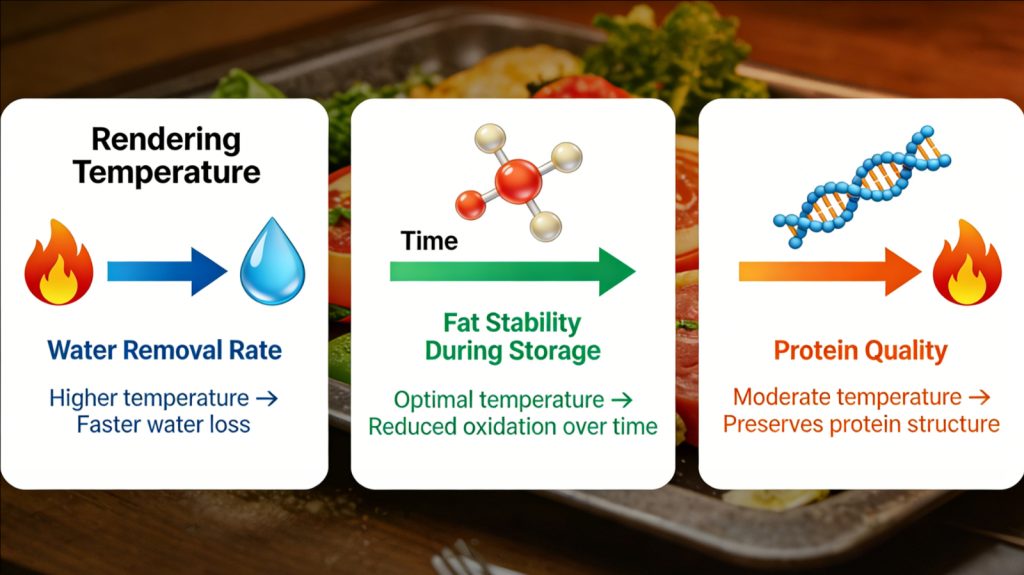
What temperature controls
Water removal rate
As water leaves, product behavior shifts and separation becomes more stable. Temperature rises as dehydration completes.
Fat stability risk in storage
Moisture carryover increases hydrolysis risk and can show up as higher free fatty acids.
Protein quality in meal
Industry guidance emphasizes running hot enough to melt fat while limiting unnecessary protein damage.
Stage targets and what to watch
Preheating and ramp-up
Goal
- Heat evenly
- Avoid localized scorching
- Reduce early emulsification
What to watch
- Slower ramp-up can reduce foaming on high-moisture loads
- Fast ramp-up can create hot zones that later destabilize pressing
Cooking and dehydration in the cooker
Goal
- Drive off water
- Reach a stable end-point for separation
Typical end-point ranges
- Mixed raw materials: 115°C to 140°C
- Lower-water fat-and-bone loads: 105°C to 125°C
How to pick a target inside the band
- Run lower when you already achieve clean separation and you prioritize meal quality
- Run higher when you struggle to remove water and you see moisture carryover
Pressing and solids separation stability
Goal
- Feed the press with predictable consistency and minimal trapped water
Low end-point temperature often shows up as
- Higher fat loss to meal
- Wetter press cake
- Filtration load spikes downstream
Fat clarification and filtration temperature
Goal
- Keep fat fluid for stable flow and filtration without unnecessary overheating
What to watch
- Control residence time in heated tanks
- Use moisture and free fatty acids checks to verify stability in storage
Feather hydrolysis and feather meal processing
Goal
- Control hydrolysis progress, then keep drying stable
Common staged zones in published work
- 120–135°C
- 140–155°C
- Above 160°C
Drying notes often reference exit temperatures near 200°F in some systems, separate from hydrolysis temperature control.
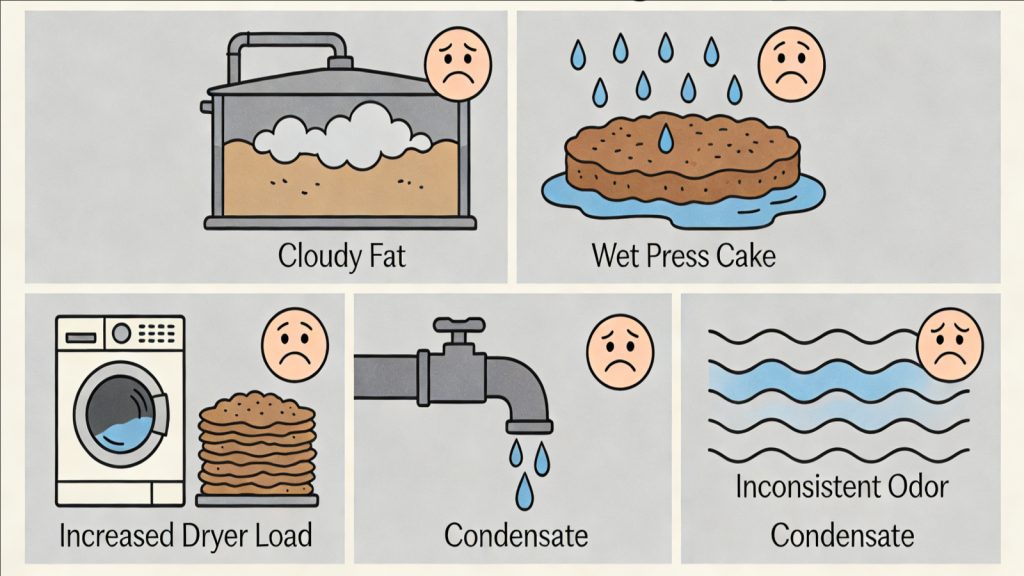
When temperature is too low
- Fat separation looks cloudy after pressing
- More fat stays locked in solids
- Press cake stays wet and heavy
- Dryer load rises and meal consistency swings
- Odor and condensate behavior becomes inconsistent because water removal never stabilizes
When temperature is too high
- Meal darkens and quality complaints increase
- Protein value drops due to overheating and long exposure
- Fouling increases on heat-transfer surfaces
- Burnt notes and off-odors appear from localized scorching
- Vapor surges create instability in condensers and downstream handling
Stable results come from temperature, time, mixing, and vapor handling working together.
How to stabilize results
Control the end-point, not only the setpoint
A stable end-point correlates with dehydration completion and consistent press behavior.
Use mixing to avoid hot spots
Hot spots contaminate fat, darken meal, and overload filtration.
Keep condensation performance consistent
If condenser performance drifts, cooker vapor handling drifts and your effective cooking behavior changes even when controller values appear stable. Vapor flow instability can also increase odor risk and condenser load.
Troubleshooting checklist
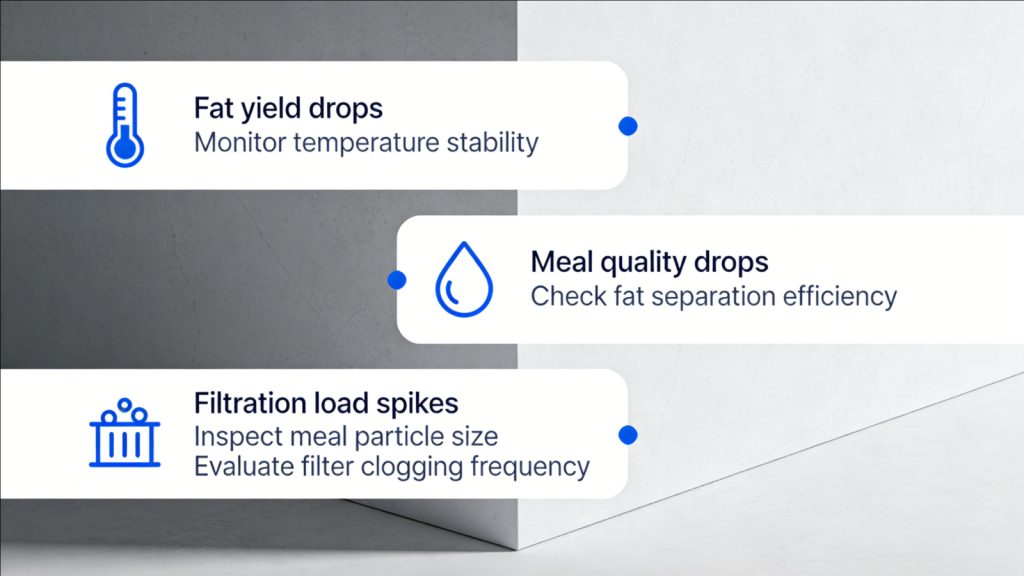
If fat yield drops
- Confirm cooker end-point temperature repeats shift to shift
- Check moisture carryover into fat storage and filtration
- Verify the press feed is not under-dehydrated
If meal quality drops
- Reduce time at peak temperature before discharge
- Check for fouling and localized overheating
- Keep the target aligned with melting fat while limiting protein damage
If filtration load spikes
- Verify fat temperature at filter inlet for stable viscosity
- Check press cake consistency for dehydration swings
Process notes you can state on-page
- Rendering is a controlled cooking and drying operation that depends on temperature and time management.
- Batch end-point temperature windows vary by moisture and composition of raw material.
- Moisture control links directly to storage stability and free fatty acids trends.
FAQs
What is the best rendering temperature
There is no single number. Many dry batch cooks end around 115°C to 140°C, while lower-water fat-and-bone loads often finish around 105°C to 125°C.
Why does temperature affect fat yield
Temperature changes viscosity, drives off water, and affects how cleanly fat separates from solids. Discharging before dehydration stabilizes increases fat loss to meal.
Can higher temperature fix poor separation
Sometimes, but it can also harm meal quality and increase fouling. Use temperature to complete dehydration, then stabilize with residence time, mixing, and consistent condensation.
What temperature is used for feather hydrolysis
Published work describes staged zones at 120–135°C, 140–155°C, and above 160°C, with stage sensitivity depending on time and conditions.
Conclusion
Rendering temperature works best as an end-point target tied to dehydration, not as a single number you push upward. Stay within proven stage ranges, confirm repeatable end-point behavior, and keep mixing and condensation stable. That combination protects fat yield, reduces filtration swings, and helps maintain meal quality.