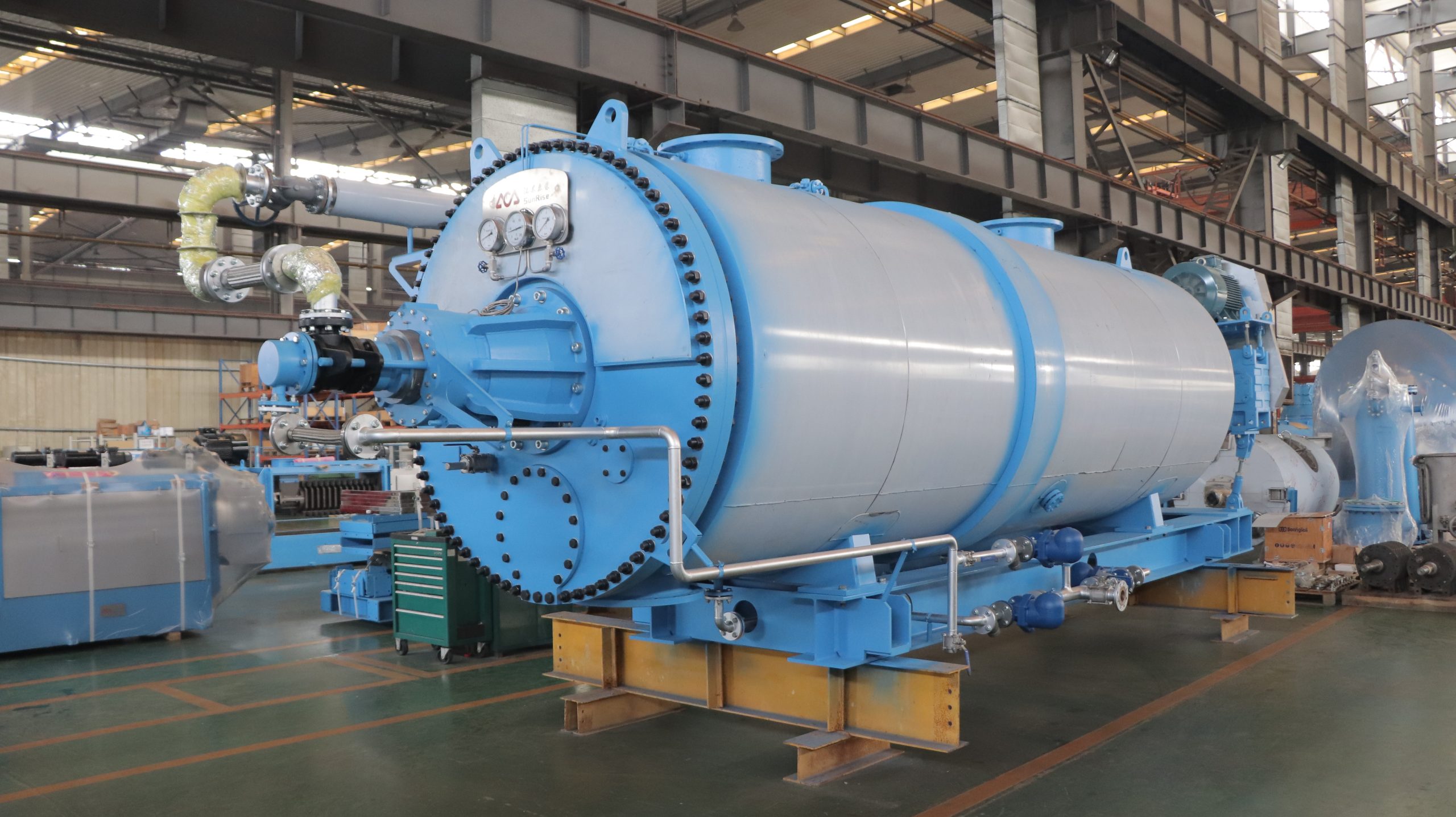
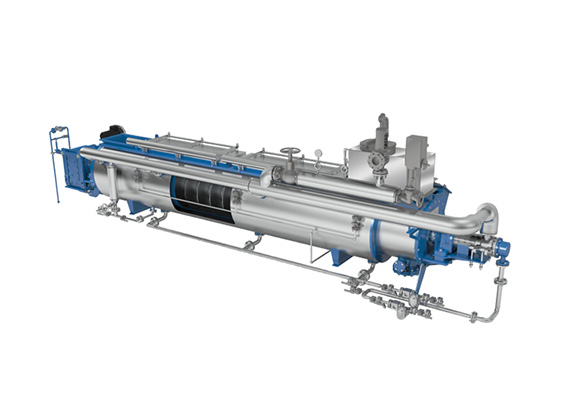
Rendering Plant Energy Consumption: 7 Engineering Tweaks That Cut Steam Costs by 30%
Rendering Plant Energy Consumption: 7 Engineering Tweaks That Cut Steam Costs by 30%
Seven targeted engineering changes — most of them retrofits, not full replacements — can cut steam consumption in a rendering plant by 25–30%, often paying for themselves within 12 months. Steam typically accounts for 40–60% of a renderer’s total energy bill, which means even a modest percentage drop translates into five- or six-figure annual savings depending on throughput. In this article we break down each tweak with real numbers, explain why it works thermodynamically, and show you how to prioritize based on your existing setup.
Why Steam Dominates Rendering Plant Operating Costs
Here’s a number that surprises most plant managers: a mid-sized rendering operation processing 10 tonnes of raw material per hour can burn through 4–6 tonnes of steam in that same hour. At current natural gas prices, that’s roughly $180–$280 USD per hour in fuel alone — before you even count electricity, labor, or maintenance.
Steam drives the core thermal processes: cooking, drying, and sometimes sterilization. It also powers indirect heating loops, evaporators, and deodorizing systems. Because steam touches almost every unit operation, small inefficiencies compound fast. A 2% loss here, a 3% loss there, and suddenly you’re hemorrhaging 15–20% more energy than necessary.
The Hidden Cost Multiplier
Wasted steam doesn’t just waste fuel. It increases cooling-water demand (to condense the excess), accelerates corrosion in poorly insulated lines, and raises ambient temperatures inside the plant — which in turn increases HVAC load and degrades worker comfort. Fixing steam efficiency is a force multiplier that improves multiple cost lines simultaneously.
If you’re evaluating a modern rendering plant design, energy architecture should be one of the first conversations — not an afterthought bolted on during commissioning.
Tweak #1: Optimize Condensate Return to the Boiler
The single fastest win in almost every rendering facility we audit is condensate recovery. Hot condensate returning to the boiler at 80–95 °C instead of feeding cold make-up water at 15–25 °C saves roughly 8–12% of total steam generation energy. The math is straightforward: every 6 °C rise in feedwater temperature reduces fuel consumption by approximately 1%.
What Goes Wrong
Most plants do have condensate return lines. The problem is that they leak, they’re partially blocked by scale, or — worse — operators bypass them because a single steam trap failed and started sending live steam back into the condensate tank, causing water hammer. A failed-open steam trap can waste 25–50 kg of steam per hour, and many plants have dozens of traps.
The Fix
- Audit every steam trap — ultrasonically or with temperature probes — at least twice a year. Replace failed traps immediately.
- Insulate condensate return lines. Bare copper or steel pipe radiating at 90 °C loses 200–400 W per linear meter.
- Install a condensate recovery pump if gravity return isn’t feasible. Modern electric condensate pumps cost $2,000–$5,000 and pay back in weeks.
For instance, a poultry rendering facility in Southeast Asia we worked with had 38 steam traps — 11 of which had failed open. Replacing those traps and insulating 120 meters of bare condensate pipe cut their monthly gas bill by 9.4% within the first billing cycle.
Tweak #2: Capture Flash Steam from Condensate
When high-pressure condensate drops to a lower pressure — say, from a 10 bar cooker jacket to a 1 bar condensate tank — a portion of that condensate “flashes” back into steam. In a typical rendering plant, 10–15% of the condensate mass re-evaporates as flash steam. If you’re venting that to atmosphere, you’re literally watching money float away.
How to Recover It
Install a flash vessel between the high-pressure condensate discharge and the return tank. The flash steam produced can be piped into a low-pressure header and used for:
- Feedwater preheating via a deaerator
- Space heating or tank warming
- Blood or stickwater evaporation pre-stages
A flash vessel for a 5-tonne/hour steam system costs $8,000–$15,000 installed and typically saves 5–8% of boiler fuel. Payback: 6–12 months.
Sizing Tip
The percentage of flash steam generated is governed by the enthalpy difference between the high-pressure and low-pressure states. At 10 bar dropping to atmospheric, expect about 13% flash. At 6 bar dropping to atmospheric, about 10%. Your boiler engineer can size the vessel in an afternoon.
Tweak #3: Upgrade Cooker and Dryer Jacket Insulation
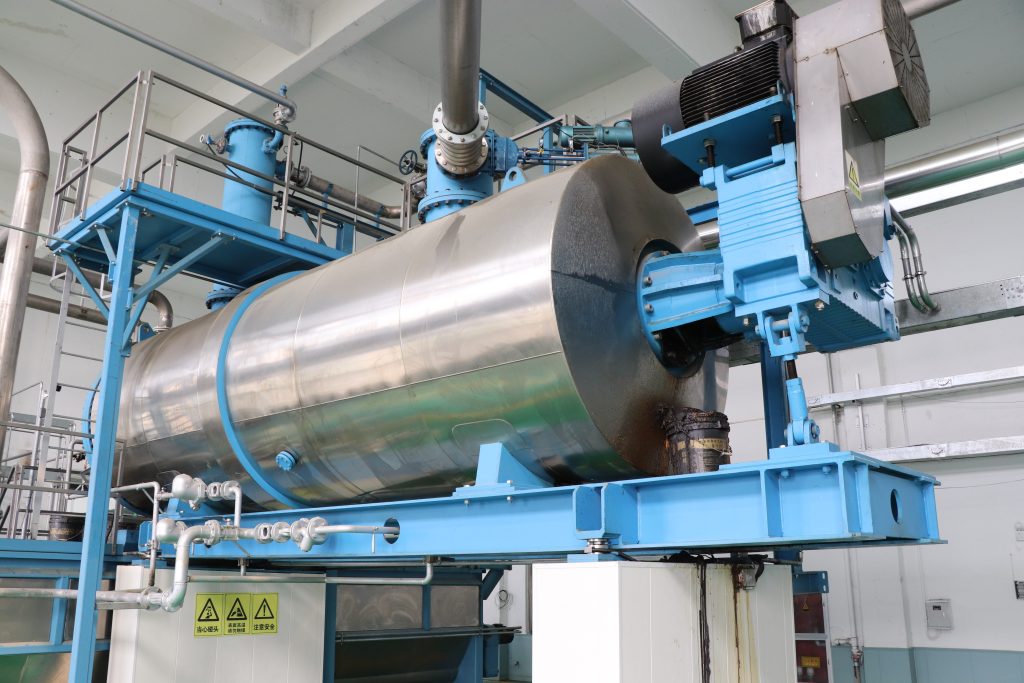
Rendering cookers and disc dryers operate at 110–150 °C surface temperatures. An uninsulated or poorly insulated cooker jacket radiates 1,500–3,000 W per square meter to the surrounding air. Multiply that by the total surface area of your cookers, dryers, and associated piping, and you’re looking at 50–150 kW of pure waste heat in a typical facility.
Modern mineral-wool or aerogel blanket insulation (50–75 mm thickness) cuts surface losses by 90–95%. The material cost is $15–$40 per square meter; installation is a weekend job during a scheduled shutdown.
Don’t Forget the Flanges and Valves
Engineers insulate the straight runs and forget the fittings. A single uninsulated 150 mm flange at 140 °C loses as much heat as a full meter of bare pipe. Removable insulation jackets for flanges, valves, and sight glasses cost $50–$150 each and are reusable during maintenance.
This tweak alone delivers 3–5% steam savings with a payback of 2–4 months — the best ROI-per-dollar of any item on this list.
Tweak #4: Install a Waste-Heat Economizer on the Boiler Stack
Your boiler exhaust stack is probably dumping flue gas at 180–250 °C. An economizer — essentially a finned-tube heat exchanger sitting in the flue gas path — captures that waste heat to preheat boiler feedwater. Every 20 °C you raise feedwater temperature saves roughly 3–4% in fuel.
Real-World Impact
A beef rendering operation in South America installed a condensing economizer on their 8-tonne firetube boiler. Stack temperature dropped from 220 °C to 90 °C, feedwater temperature rose from 60 °C to 102 °C, and annual natural gas consumption fell by 8.7%. The economizer cost $45,000 installed and paid back in 14 months.
Condensing vs. Non-Condensing
If your boiler burns natural gas (not heavy fuel oil), consider a condensing economizer that cools flue gas below the dew point (~55 °C). This recovers latent heat from water vapor in the exhaust and can push total efficiency above 95%. With oil-fired boilers, corrosion concerns from sulfur make non-condensing units the safer choice — still worthwhile, just slightly less dramatic.
This upgrade pairs beautifully with Tweak #1. Hotter feedwater from condensate return means the economizer has less lifting to do, but the combined effect still stacks: you’re attacking losses at two different points in the steam cycle.
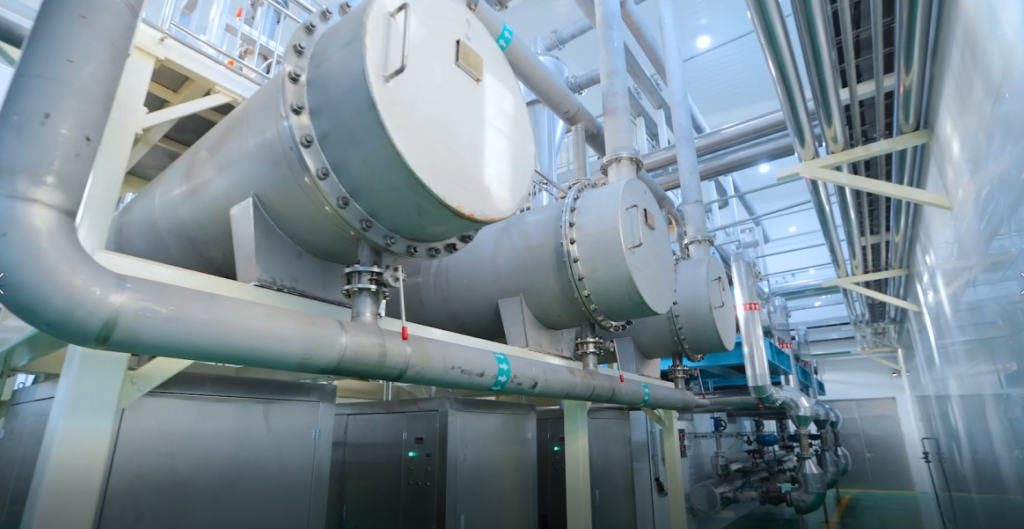
Tweak #5: Add Variable Frequency Drives to Boiler Fans
Most rendering plant boilers use fixed-speed induced-draft (ID) and forced-draft (FD) fans controlled by dampers. Damper control is like driving with one foot on the gas and one on the brake — the motor runs at full speed while the damper throttles airflow, wasting 15–30% of fan electrical energy.
Variable frequency drives (VFDs) modulate motor speed directly, matching airflow to actual combustion demand. The power savings follow the affinity laws: halving fan speed cuts power consumption by roughly 87.5% (power scales with the cube of speed).
The Steam Connection
You might wonder: “VFDs save electricity, not steam — why is this on a steam-cost list?” Two reasons. First, better air-fuel ratio control from VFD-driven fans improves combustion efficiency by 1–3%, which directly reduces fuel per tonne of steam. Second, the electricity savings free up budget that offsets steam costs in your overall energy P&L.
Typical investment: $5,000–$15,000 per fan motor. Payback: 8–14 months. As a bonus, VFDs dramatically reduce fan noise — your operators will thank you.
Tweak #6: Pre-Break Raw Material for Faster Cook Times
This one is counterintuitive to some operators: spending energy on size reduction before the cooker actually reduces total energy consumption. Here’s why. Rendering cookers transfer heat from the steam jacket through the material mass. Larger chunks have a lower surface-area-to-volume ratio, which means heat penetrates slowly. The cooker runs longer, consuming more steam, to reach the target core temperature.
The Numbers
Reducing average particle size from 150 mm to 30–50 mm using a double shaft crusher can cut cook cycle time by 15–25% in batch systems. In continuous cookers, it allows higher throughput at the same steam flow — effectively reducing specific steam consumption (kg steam per kg product) by 5–9%.
Watch the Trade-Off
Pre-breaking does add electrical load — typically 15–40 kWh per tonne of raw material depending on bone content. But the steam savings (measured in equivalent kWh of thermal energy) outweigh the electrical cost by a factor of 3–5×. It’s one of the clearest net-positive energy trades in the rendering process.
This tweak integrates naturally with broader turnkey rendering plant designs where the crusher, conveyor, and cooker are sized as a system rather than bolted together piecemeal.
Tweak #7: Evaluate a Continuous Rendering Process
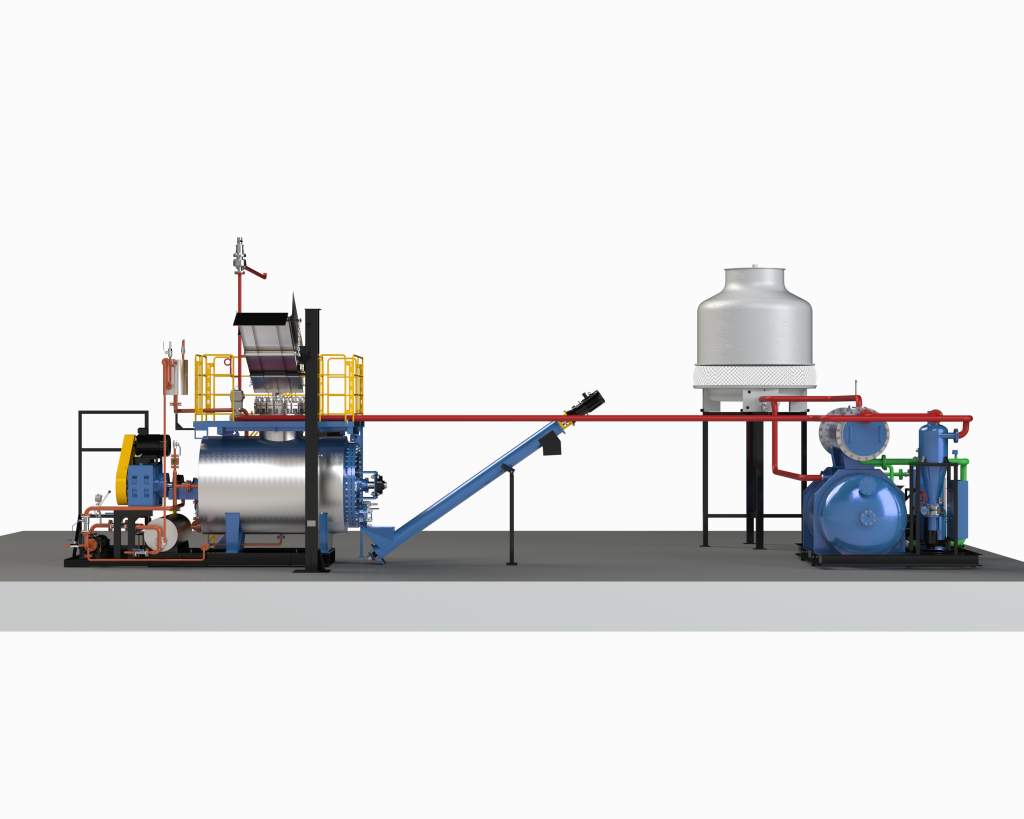
If you’re still running batch cookers and your throughput exceeds 3–4 tonnes per hour, switching to a continuous rendering process is the single highest-impact change on this list — but also the most capital-intensive. Continuous systems maintain steady-state thermal conditions, eliminating the repeated heat-up and cool-down cycles that make batch processing inherently wasteful.
Where the Savings Come From
- No thermal cycling: Batch cookers heat from ambient to 110–145 °C, hold, then discharge and restart. Each cycle wastes 10–15% of the steam just reheating the vessel mass.
- Tighter process control: Continuous systems use PID-controlled steam valves that match energy input to real-time load, avoiding overshoot.
- Heat integration: Continuous layouts lend themselves to counter-current heat exchange — hot product preheats incoming raw material, recovering 20–30% of sensible heat.
Typical specific steam consumption drops from 1.0–1.3 kg steam/kg raw material in batch to 0.7–0.9 kg steam/kg in well-designed continuous lines — a 10–15% reduction on top of whatever you’ve already gained from Tweaks 1–6.
For a detailed comparison of both approaches, including throughput thresholds and capital considerations, see our guide on continuous vs. batch rendering processes.
Stacking the Savings: How to Prioritize These Tweaks
Not every plant needs all seven tweaks, and the order matters. Here’s a practical prioritization framework:
Phase 1: Quick Wins (0–6 months)
- Steam trap audit and condensate return optimization (Tweak #1)
- Insulation upgrades on cookers, dryers, flanges, and valves (Tweak #3)
Combined cost: $5,000–$20,000. Expected savings: 10–15%. These fund Phase 2.
Phase 2: Medium Investments (6–18 months)
- Flash steam recovery (Tweak #2)
- Boiler stack economizer (Tweak #4)
- VFDs on boiler fans (Tweak #5)
Combined cost: $60,000–$120,000. Expected additional savings: 10–15%.
Phase 3: Strategic Upgrades (18–36 months)
- Pre-breaking system (Tweak #6)
- Continuous process conversion (Tweak #7) — only if throughput and economics justify it
Combined cost: $150,000–$500,000+. Expected additional savings: 8–15%.
The cumulative effect of all seven tweaks, properly implemented, routinely delivers 25–35% total steam cost reduction. We’ve seen plants hit 38% in cases where the baseline was particularly inefficient.
Measuring What Matters: Steam KPIs Every Renderer Should Track
You can’t manage what you don’t measure. Yet many rendering plants don’t track steam consumption at the unit-operation level — they just look at the monthly gas bill and shrug. Here are the four KPIs that separate energy-efficient renderers from the rest:
- Specific steam consumption (SSC): kg of steam per kg of raw material processed. Target: 0.7–1.0 for continuous, 0.9–1.3 for batch.
- Condensate return rate: percentage of generated condensate returned to the boiler. Target: >85%.
- Boiler efficiency: measured as fuel-to-steam efficiency using flue gas analysis. Target: >88% for firetube, >92% with economizer.
- Steam trap failure rate: percentage of traps failed (open or closed) at last audit. Target: <5%.
Instrumentation Doesn’t Have to Be Expensive
A basic steam flow meter ($1,500–$4,000), a condensate flow meter, and a portable flue gas analyzer ($3,000–$8,000) give you everything you need. Log data weekly, trend it monthly, and you’ll spot drift before it becomes a budget problem.
Understanding these metrics also helps when evaluating the overall performance of your rendering plant against industry benchmarks.
Put These Tweaks to Work in Your Plant
Steam cost reduction in rendering isn’t a single magic bullet — it’s a disciplined stack of engineering improvements, each one compounding on the last. Start with the cheap, fast wins (traps, insulation, condensate return), reinvest the savings into medium-tier upgrades (economizers, flash recovery, VFDs), and evaluate major process changes only when the data justifies it.
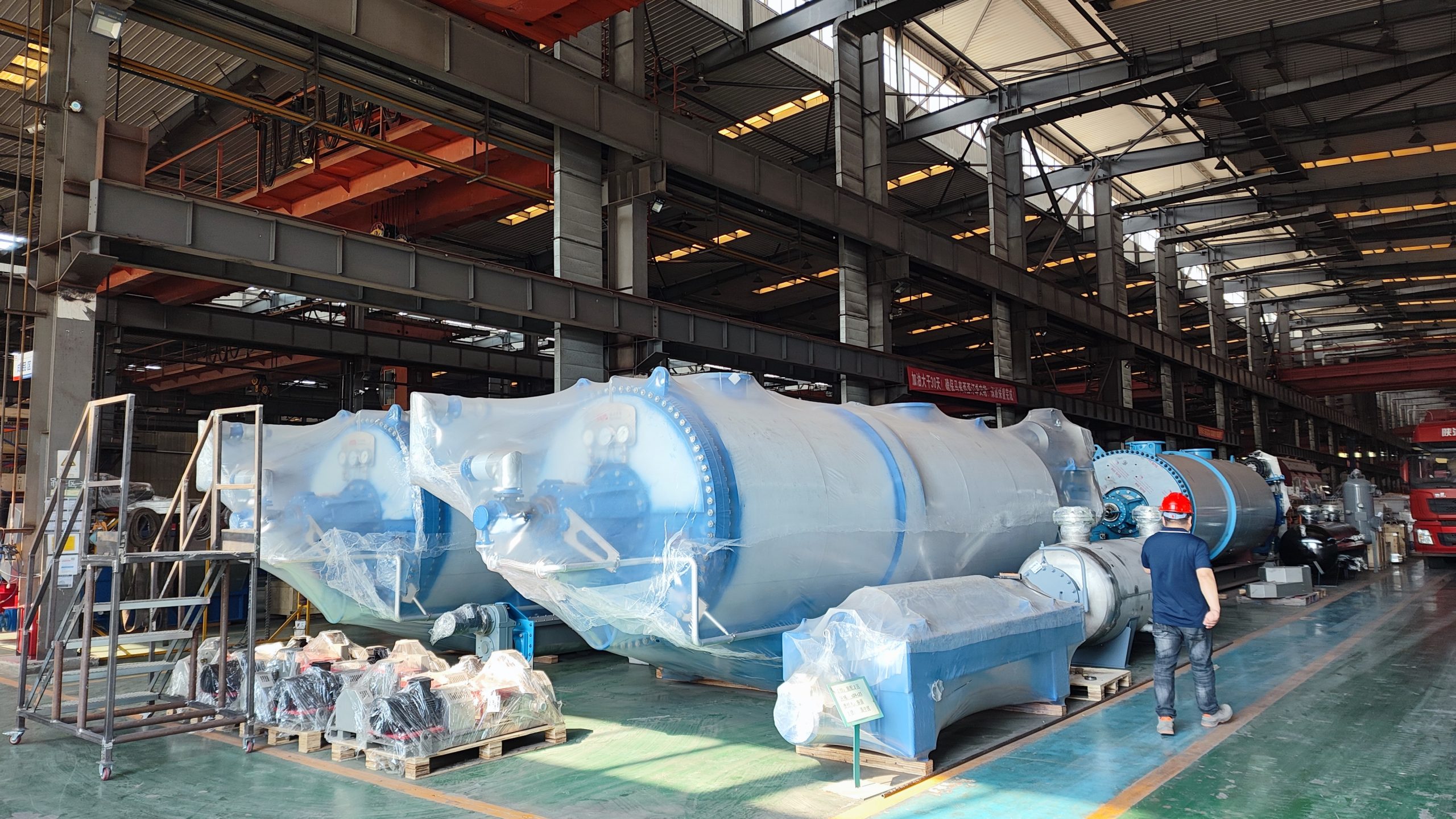
At SunRise Rendering, we’ve spent nearly three decades designing and optimizing rendering systems that treat energy efficiency as a core engineering parameter — not an afterthought. Whether you’re retrofitting an aging batch plant or specifying a new continuous line, our engineering team can model your specific steam balance and identify exactly where the biggest savings hide. Reach out through our rendering plant solutions page to start the conversation.