

Meat and Bone Meal Processing and Batch Cookers: A Complete Guide
Meat and Bone Meal Processing and Batch Cookers: A Complete Guide
1. Why meat and bone meal processing is back in focus in 2026
In the first half of 2026, the animal protein raw material market traced two opposite curves.
Supply is tightening. Persistent fishing bans off north-central Peru have pushed Chinese domestic super prime steam fishmeal quotes to a record RMB 20,900–21,000 per tonne.
Access is opening. On 24 April, GACC Announcement No. 51 of 2026 cleared Spanish porcine protein feed for shipment to China — meat meal, bone meal, meat and bone meal, blood meal and plasma protein powder. On 29 May, China lifted the foot-and-mouth-related import restrictions on Brazil. In January–April, China’s meat and bone meal imports rose 39% year on year.
International peers are scaling up too. In late May, the European Fat Processors and Renderers Association (EFPRA) held its 24th Congress in Tenerife; its 25 member states process roughly 18.3 million tonnes of animal by-products each year. To see which machines make up that line, start with the overall configuration of SunRise meat and bone meal equipment.
2. The four core stages of meat and bone meal processing
Whatever the scale, a meat and bone meal line runs on four stages. Understanding what each stage actually solves is the precondition for judging whether a line’s equipment specification is sound.
2.1 Raw material reception and pre-breaking
By-products are held by risk category, then reduced in particle size by a pre-crusher. The EU sets a maximum particle size for processed material — oversized particles stop heat from reaching the core, and sterilisation ends up “cooked outside, raw inside.”
2.2 Cooking: sterilisation and fat release
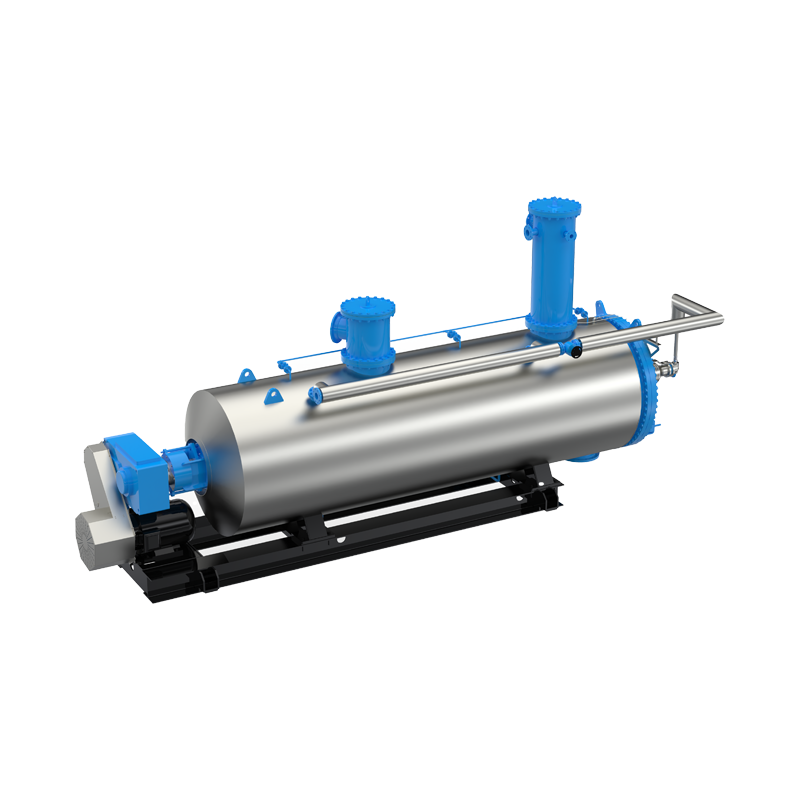
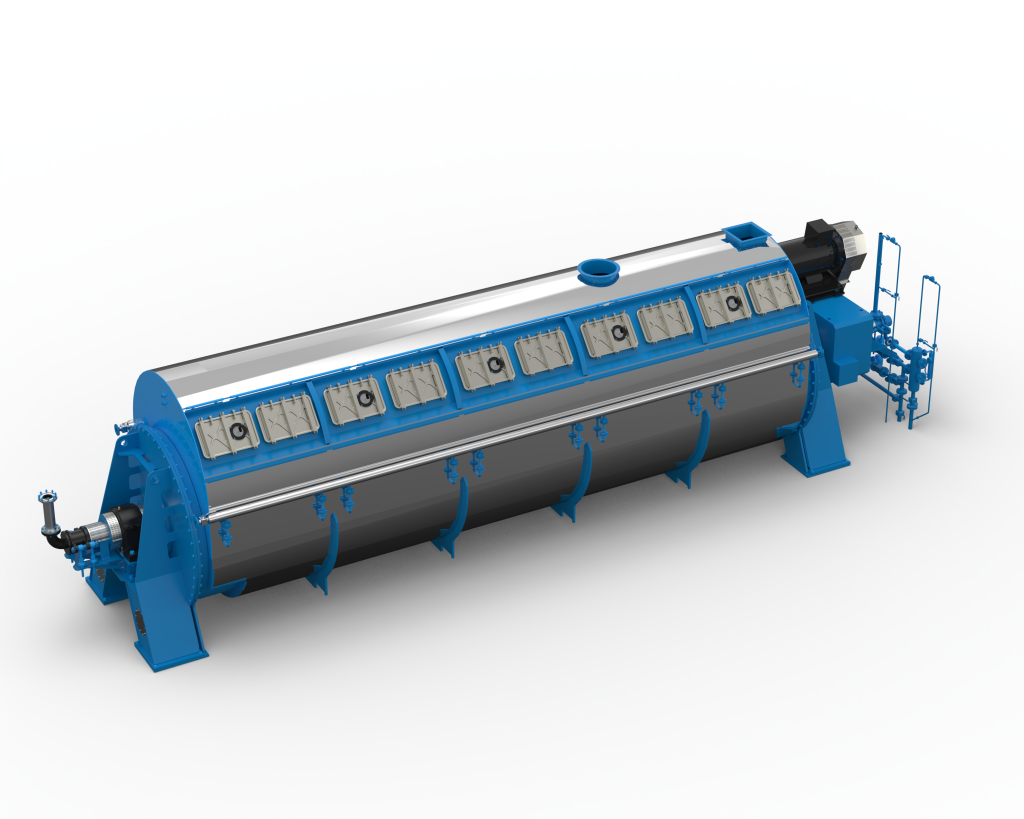
A batch cooker loads material into a jacketed pressure vessel and seals it. Steam circulates through the jacket, the central tube and the wall tubes, transferring heat evenly through the metal wall rather than blasting the surface of the material — which is why even heating and material quality can both be preserved.
Temperature and time cannot be casually lowered. The US EPA’s AP-42 Chapter 9.5.3 records dry rendering at typically 121–135 °C held for 1.5–2.5 hours, rising to 138–149 °C for poultry feathers; Method 1 of the EU’s (EC) No 1069/2009 specifies 133 °C, 3 bar, 20 minutes; China requires Spanish porcine protein feed to reach a core temperature of at least 90 °C sustained for at least 15 minutes. Parameters must map one-to-one onto material type and destination market.
2.3 Pressing and separation
A twin-screw press separates fat from solids. How well it does so sets the fat grade and the residual fat content of the cake — high residual fat makes the downstream drying stage more energy-hungry.
2.4 Drying
The cake’s moisture content is still above the safe storage line and must be dried into a controllable range. A disc dryer relies on multi-layer disc heat exchange and suits high-value products such as meat and bone meal, feather meal and fishmeal — while also being the line’s second-largest energy consumer. For the real output of the whole flow, see the SunRise 150 t/day wet-rendering meat and bone meal line case study.
3. Choosing a batch cooker: material first, capacity seco
| Dimension | Batch cooker | Continuous cooker |
| Capacity | 1–15 t per batch | 5–50 t/hour |
| Upfront investment | Lower | Higher |
| Feedstock flexibility | High — handles mixed species and tissue | Moderate — prefers homogeneous material |
| Energy use | Higher, repeated heat-up and cool-down | Lower — stable operation can cut steam per tonne by 15–30% |
| Product consistency | Batch-to-batch variation | High |
| Best fit | Small-to-mid scale, mixed feedstock, frequent changeover | Large scale, single species, continuous feed |
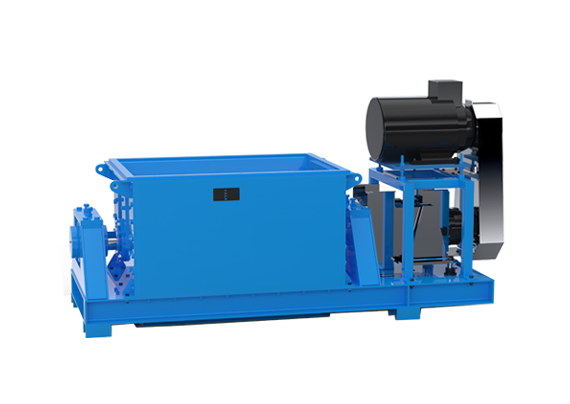
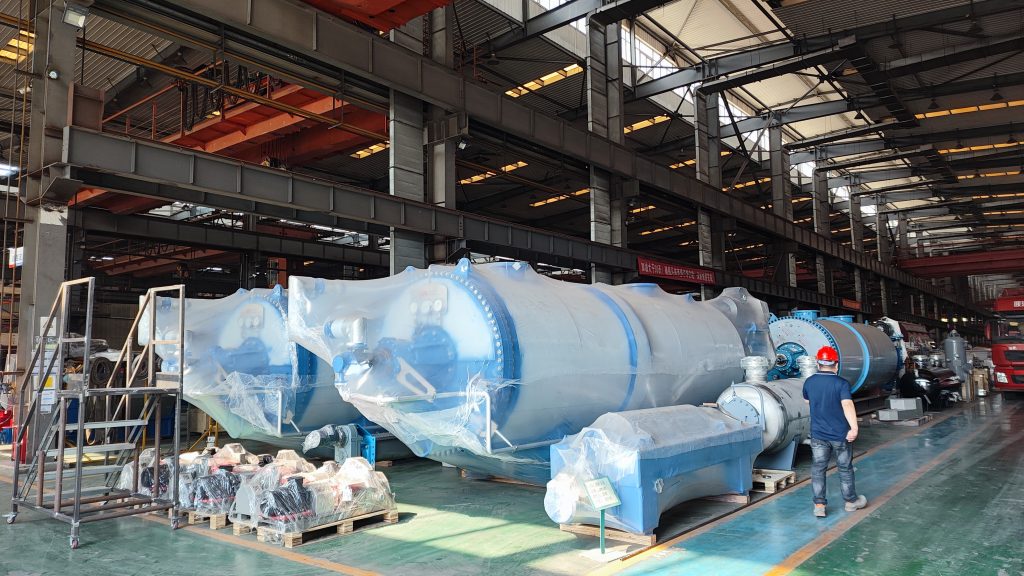
The decision logic is straightforward: under 10 tonnes per shift from mixed sources, a batch cooker wins; a steady 15–20 tonnes or more of a single species is where a continuous cooker can earn back its premium through steam per tonne. Note too that the cooker is the hardest machine on the line to replace — a changeover means weeks of downtime.
4. Three compliance lines that moved in 2026
The regulatory changes that bear directly on meat and bone meal processing in 2026 cluster into three areas. Miss any one of them and a line can stall at environmental sign-off or at customs clearance.
4.1 Ecological Environment Code in force from 15 August
The Ecological Environment Code of the People’s Republic of China was adopted on 12 March 2026 at the fourth session of the 14th National People’s Congress and took effect on 15 August. Article 171 requires entities engaged in livestock and poultry farming and slaughter to collect, store, transport, treat harmlessly and resource-recover waste such as manure and carcasses in a timely manner.
4.2 New national standard GB/T 20193-2025
Feed materials — Bone meal and meat and bone meal, the new national standard GB/T 20193-2025, was published on 31 October 2025 and takes effect on 1 May 2026, replacing the 2006 edition. Both the production and procurement sides need to align their testing items with the new standard.
4.3 Export registration and digital records
China’s market-access requirements for Spanish porcine protein feed now extend to PCR testing for ruminant-derived material (limit of detection 0.1%) and limits for Salmonella and Enterobacteriaceae. If sterilisation curves and traceability ledgers are still on paper, clearance efficiency suffers directly.
5. Biosecurity: why cooking is irreplaceable
In the first quarter of 2026, South Korea culled at least 148,000 pigs across 24 farms because of African swine fever and destroyed about 490 tonnes of suspect feed; the investigation detected ASFV genetic material in porcine plasma protein material. EFPRA has issued a statement on ASF, reiterating that properly processed animal protein poses no transmission risk — and the premise of that conclusion is precisely complete, auditable records of cooking temperature, pressure and time.
6. Frequently asked questions
Q1: Can batch and continuous cookers be used together?
Yes, and it is a common expansion path: prove the feedstock and product quality on a batch line first, then add a continuous line once throughput stabilises, to take the bulk volume.
Q2: Is a higher cooking temperature always better?
No. Excessive temperature over-denatures protein and lowers amino acid availability. Set parameters by material type and destination-market standard.
Q3: Where do export operations most often get stuck?
Usually not at the equipment but at the records. The completeness of sterilisation curves, raw material origin certificates and test reports decides whether goods enter the plant smoothly or sit at port.
7. Conclusion
Meat and bone meal processing is, at heart, the conversion of a slaughterhouse by-product disposal cost into a tradeable protein asset. In a year when fishmeal is expensive, imports have restarted and regulation is tightening at the same time, which cooking equipment to install depends on a company’s own read of its feedstock mix. For a calculation against your specific material and capacity, contact SunRise for a tailored proposal.
Categories
Recent Posts
-

Meat and Bone Meal Processing and Batch Cookers: A Complete Guide
September 16, 2026 -
Where Do All the Poultry Feathers Go? From Environmental Burden to Valuable Resource — A Full-Chain Investigation
September 9, 2026 -
Feather Meal Digestibility: How Hydrolysis Time, Temperature, and Pressure Affect Pepsin Digestibility
September 1, 2026


