Feather Meal Equipment Maintenance: The Number You’re Actually Protecting
Feather Meal Equipment Maintenance: The Number You’re Actually Protecting
Most feather meal equipment maintenance programmes drift into a lubrication schedule: grease, torque, swap filters, tick the box. On a feather line that misses the point. What decides whether the meal sells at a premium is not whether the machine sounds healthy — it is whether pepsin digestibility lands in the same band, batch after batch.
The real maintenance targets sit one level below the hardware: feed moisture, effective hold time, and final moisture. Machines are only the housings that hold those three numbers steady. What follows walks the material path in order, and shows how a maintenance decision at each stage reaches the finished analysis.

Start with the right KPI — not uptime
Raw feather is almost pure keratin, cross-linked by disulfide bonds. Untreated, it passes through a monogastric gut largely unchanged; pepsin digestibility sits in the low single digits. Hydrolysed properly, it reaches 75–85%, and 75% is the accepted floor for adequately processed meal under AAFCO, as recorded by Feedipedia. Feedipedia also documents a representative process at roughly 143 °C under 3 atmospheres for 30–40 minutes.
Overshooting is just as expensive. Push temperature or time too far and cystine is destroyed; the lab number can still look respectable while the animal gets less. Which is why the practical target is a stable band, not a maximum.
Here is what makes feather meal awkward to maintain: a batch at 60% digestibility and one at 85% look the same on the pile. Same colour, same feel, same flow. Nothing alarms. The customer discovers it at first inclusion. So the maintenance trigger has to be a number, not a noise.
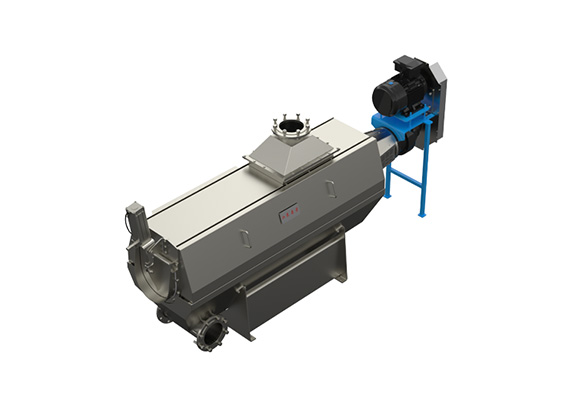
Before the vessel: the Feather Press sets the steam bill
Feathers leave the slaughter line wet. A Feather Press takes out free water before the batch cooker sees the load. Worn press screens, worn screw flights or an opened-up compression gap all raise the moisture entering the vessel.
The consequence is not simply “cook a little longer”. The vessel first has to raise that excess water past 130 °C. Heat-up stretches, the effective hold at temperature shrinks, and digestibility drifts on unchanged setpoints. This is the most common explanation for “we didn’t change anything and the quality moved”.
Three checks carry most of the value. Look at filtrate clarity every shift — solids in the filtrate usually mean a torn screen. Measure pressed-cake moisture weekly and log it as a process number, not an equipment number. Change gearbox and bearing oil on condition, not on the calendar.
The hydrolysis stage: pressure boundary is quality and compliance at once
Shaft packing or a mechanical seal is the most quietly ignored part of this stage, on a batch cooker and a continuous hydrolyser alike. Early leakage looks like a wisp of steam at the shaft. Nothing trips.
But if the vessel cannot hold pressure, the relief valve never lifts and the gauge may barely move. Effective hold time falls short, and digestibility varies batch to batch while every reading on the panel looks normal.
Safety accessories run on fixed cycles. Under China’s TSG 21-2016, pressure gauges are verified at intervals not exceeding six months and lead-sealed, and relief valves are tested at least annually. In Europe and North America the design codes differ — PED 2014/68/EU, ASME Section VIII — but the operating logic does not: gauge verification on a short cycle, relief valve set pressure proven once a year, both documented.
The vessel itself needs attention too. Hydrolysis releases hydrogen sulphide and ammonia, and the condensate runs acidic, so welds and the inner wall are where corrosion starts. Fixed ultrasonic thickness points, measured and recorded at every opening, beat looking at the surface and tapping it.
Drying: plate fouling and steam traps show up as lost tonnes
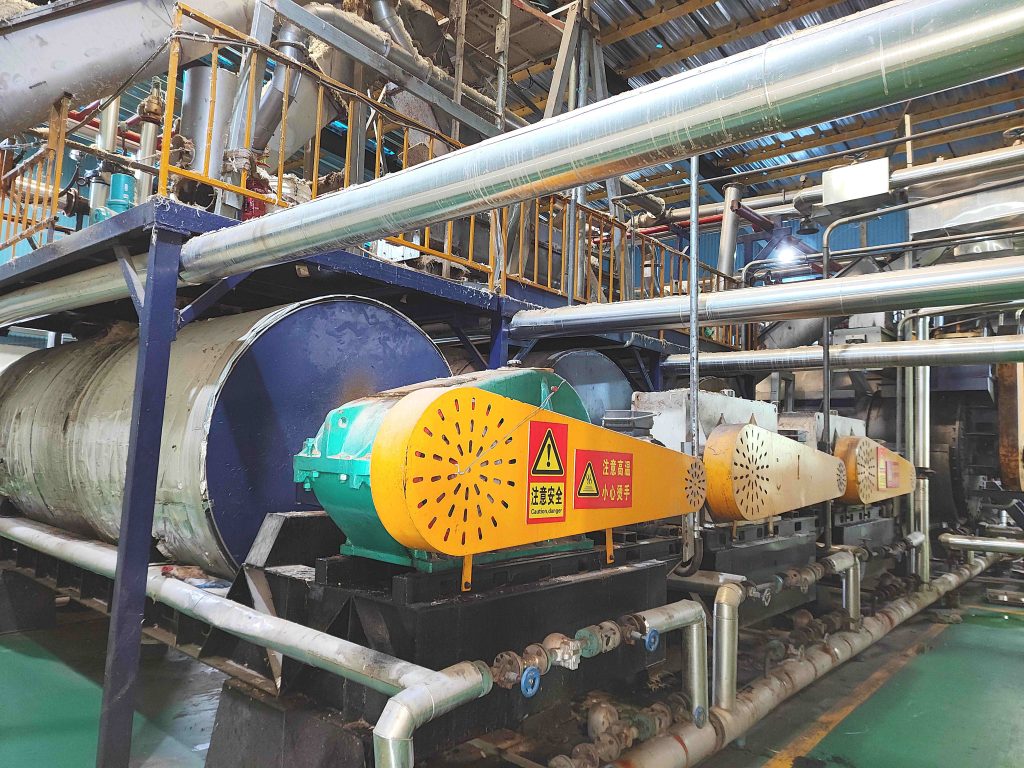
A Disc Dryer has a fixed heat-transfer area. Scale inside the discs, or a failed steam trap letting condensate sit in them, reduces heat transfer. The symptom on the floor is rarely “temperature won’t come up”. It is falling throughput at unchanged steam pressure, with final moisture creeping high.
The reflex is to raise steam pressure. That does force moisture down, at the cost of local overheating, protein damage and darker colour — buying tonnes with quality. The correct order is: confirm the trap is actually discharging rather than just feeling the pipe, then check plate fouling and condensate removal, and only then touch the steam setpoint.
Milling: particle size is where the customer signs off
Worn hammers coarsen the grind, raise power draw and cut capacity — all gradually, which is why they get tolerated. A torn screen is the sudden risk: one metal-contamination claim costs more than a year of screens. Sample the Milling plant output by batch and trend the particle size; that tracks the customer’s acceptance test more closely than running hours do.
Scrubber and condensate: when this stops, the line stops
Scaling in the Scrubber packing, blocked nozzles and a tired circulation pump show up as rising odour and falling negative pressure at the stack. One complaint is enough to stop the line.
Condensate handling is the quieter half of the same system. A blocked condensate main backs water up into the Vertical condenser circuit and reduces the vessel’s ability to shed water — which is why a surprising number of “the cooker won’t hold temperature” cases are really drainage problems, not steam supply problems.
Why 2026 makes the maintenance window harder to hold
Raw material is tightening. Between October 2025 and June 2026, European veterinary authorities reported close to 8,000 highly pathogenic avian influenza outbreaks. Poland culled about 9.7 million birds by May, including 4.88 million laying hens — roughly 12% of the national flock. Korea confirmed 58 cases in the 2025–26 season and depopulated 11.3 million layers, 13.6% of inventory, according to USDA FAS.
Fewer birds means tighter feather supply and firmer prices. The instinct is to push the maintenance window back. That is usually the expensive choice: five points of digestibility is worth more than two days of output.
The price data says the same thing. Across 235 consecutive USDA weekly reports from February 2022 to October 2026, feather meal bought crude protein at 58–95% of soybean meal’s cost. Per pound of lysine it cost 1.7–2.8 times as much — because its protein carries about a third of soybean meal’s lysine and 2.8 times its cystine.
Buyers are not paying for a crude protein figure. They are paying for digestibility plus an amino acid profile, and those are the two things maintenance actually moves. The same logic sits behind our note on moisture, temperature and particle size in rendered meal quality.
Frequently asked questions
The vessel gauge reads normal — why does digestibility still swing? Gauge pressure only proves the supply side is stable. Check effective hold time first: shaft leakage and poor condensate drainage both leave the vessel below the saturation temperature its gauge implies. Then check whether feed moisture has been moving.
Can maintenance intervals be set purely by running hours? No. Hammers and screens are set by wear and particle size, safety accessories by statutory cycle, and plate fouling by heat-transfer performance at fixed steam pressure. Collapsing those three into one calendar means none of them is actually controlled.
Is 90% digestibility better than 80%? Not necessarily. Above roughly 85–90%, over-hydrolysis usually means cystine and other sulphur amino acids have been damaged. The lab number can rise while animal performance falls, and formulators discount accordingly — aquafeed buyers especially.
How long does a shutdown need to be? It depends on scale: a monthly inspection is typically 4–8 hours, an annual overhaul 3–7 days. Schedule the pressure-vessel inspection, relief valve testing and disc cleaning into the same outage — two shutdowns a year cost more than the downtime itself.
Conclusion
Judge a feather meal maintenance programme by three things, not by how many pages the log runs to: is feed moisture stable, is effective hold time reproducible, and is throughput at fixed steam pressure holding? Get those three right and digestibility becomes a manageable number. Miss them and the paperwork is decoration.
For the routine cadence that keeps the rest of the line in condition, our rendering equipment preventive maintenance checklist covers the daily, weekly and monthly tasks. For the chemistry behind the target, see feather meal digestibility.
Jiangsu Sunrise Environmental Technology Co., Ltd. builds complete Feather Meal Manufacture lines — Feather Press, batch cooker and continuous hydrolyser, Disc Dryer, Milling plant, Meal cooler, Scrubber and condensers — with installation, commissioning and operator training. To discuss a specific line, contact us.
Categories
Recent Posts
-

Feather Meal Equipment Maintenance: The Number You’re Actually Protecting
October 28, 2026 -
Animal Crusher: Why It Decides Batch Quality, and How to Maintain It
October 22, 2026 -
Disc Dryer Commissioning for Meat Bone Meal Manufacture: What Your Outlet Abnormalities Are Actually Telling You
October 14, 2026