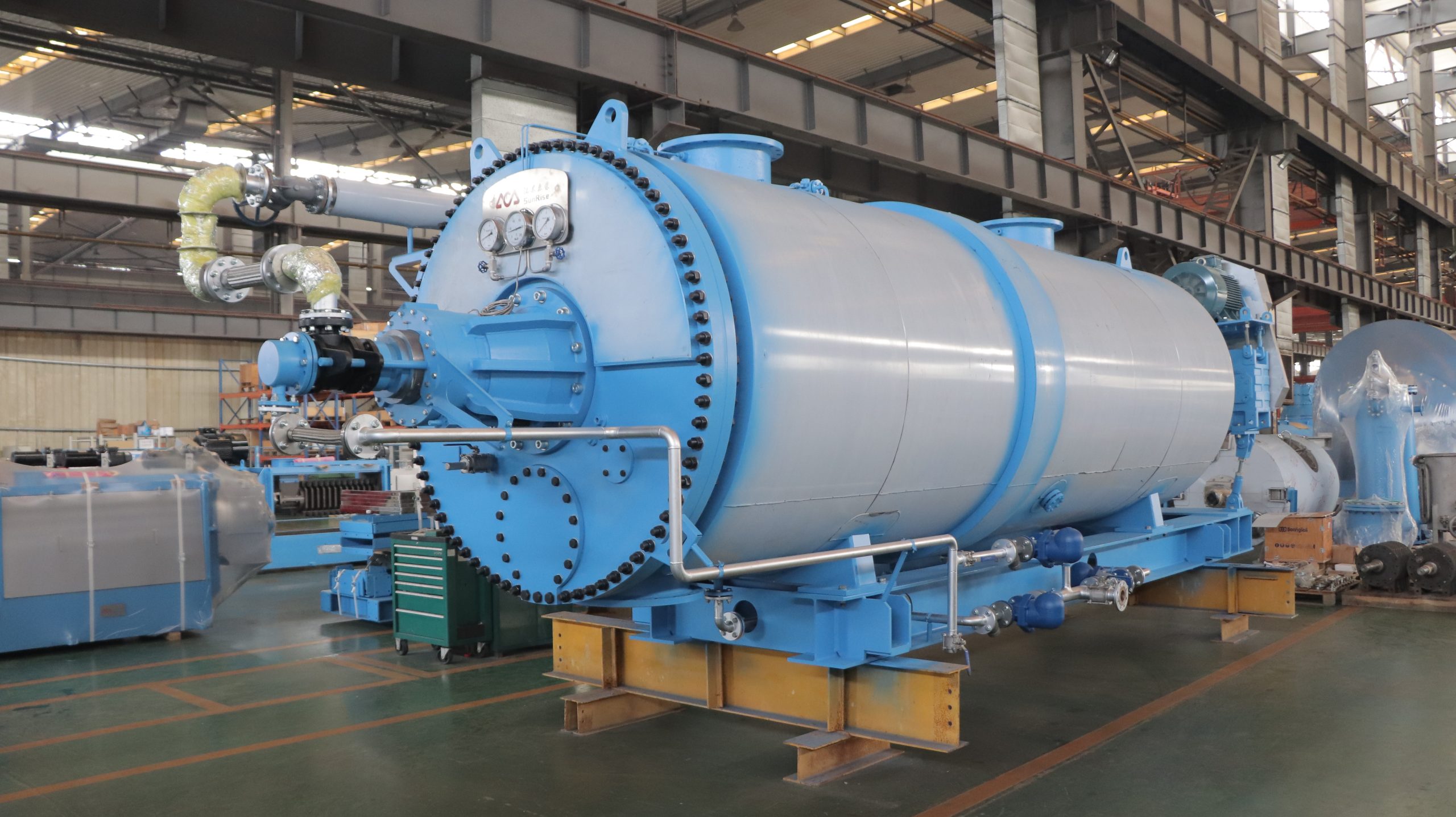
Rendering Cooker: The Hub of the Slaughterhouse Waste Chain
Rendering Cooker: The Hub of the Slaughterhouse Waste Chain
1. Upstream: disease and slaughter numbers decide how much material arrives
The input end of the chain is not managed by the plant. In the first half of 2026, Vietnam reported 697 African swine fever (ASF) outbreaks, up 59.5% year on year, with 96,000 pigs dead or culled, alongside 50 avian influenza outbreaks — 3.8 times the level of the same period in 2025. Serbia culled roughly 30,000 pigs in its 2026 outbreak, and Finland confirmed its first ASF case in July 2026.
None of this is distant from the rendering floor. Every culled animal becomes raw material that must be processed under stricter hygiene control, and every outbreak tightens the scrutiny applied to the plant that handles it.
Slaughter volumes matter just as much, and they move in the opposite direction in some markets. USDA data for late September 2026 put US cow and bull slaughter at 82,000 head for the week, against 93,000 head a year earlier. Fewer animals means less raw material — and a rendering line sized for peak volume runs below capacity.
The practical consequence is that a plant’s feedstock is variable in both quantity and sanitary status. Equipment that only performs well at design throughput, with clean material, is exposed on both fronts. This is the first reason to look at the rendering plant machine range as a system rather than a purchase — and the reason ASF-driven demand has repeatedly reshaped this industry, as it did in the Vietnam swine fever warning that producers there are still working through.
2. Midstream: why the rendering cooker is the hub
Material entering the plant has exactly two possible outcomes. Cooked to a compliant sterilisation curve, it becomes a tradable protein and fat; cooked short of that curve, or without a record proving it, it becomes a disposal cost. The rendering cooker is the machine that makes the call.
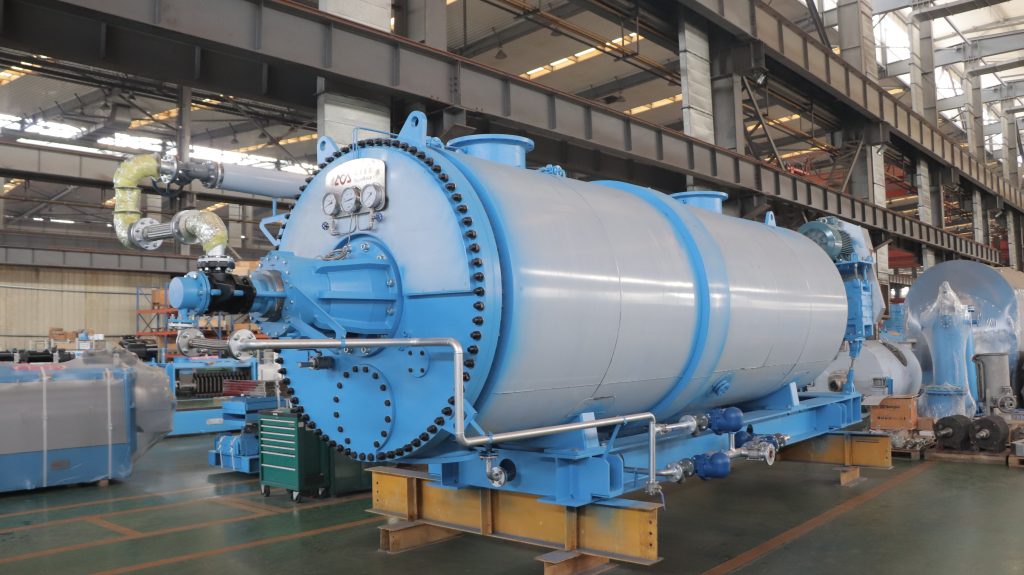
Mechanically, the distinction that matters is how heat reaches the material. In a jacketed cooker, steam circulates through the jacket, the centre tube and the wall tubes and transfers heat through the metal surface rather than spraying directly onto the product. That is how thorough sterilisation and undegraded fat quality hold at the same time — the fat does not sit in direct steam, so its free fatty acid content stays under control.
The process parameters are set by regulation, not by experience. The US EPA’s AP-42 Chapter 9.5.3 documents dry rendering at 121–135 °C held for 1.5–2.5 hours; the EU’s Regulation (EC) No 1069/2009 sets Method 1 at 133 °C, 3 bar, for 20 minutes with a maximum particle size of 50 mm. Miss the curve, and no amount of good work in the press or dryer downstream can recover the batch.
A second, quieter parameter is energy. Rendering is a thermal process: heating, separating and drying all consume fuel, and a plant with a different energy system can face a completely different cost base for the same product. When energy markets get volatile, the cooker’s steam efficiency stops being a technical footnote and becomes a margin line.
Regulation itself is shifting direction. At its 24th Congress in Tenerife, the European Fat Processors and Renderers Association framed the industry’s next phase as a move “from crisis rules to risk-based regulation” — meaning compliance will lean less on blanket prohibitions and more on verifiable process data and traceability. For a plant, that is an argument for buying instrumentation and logging, not just vessel volume.
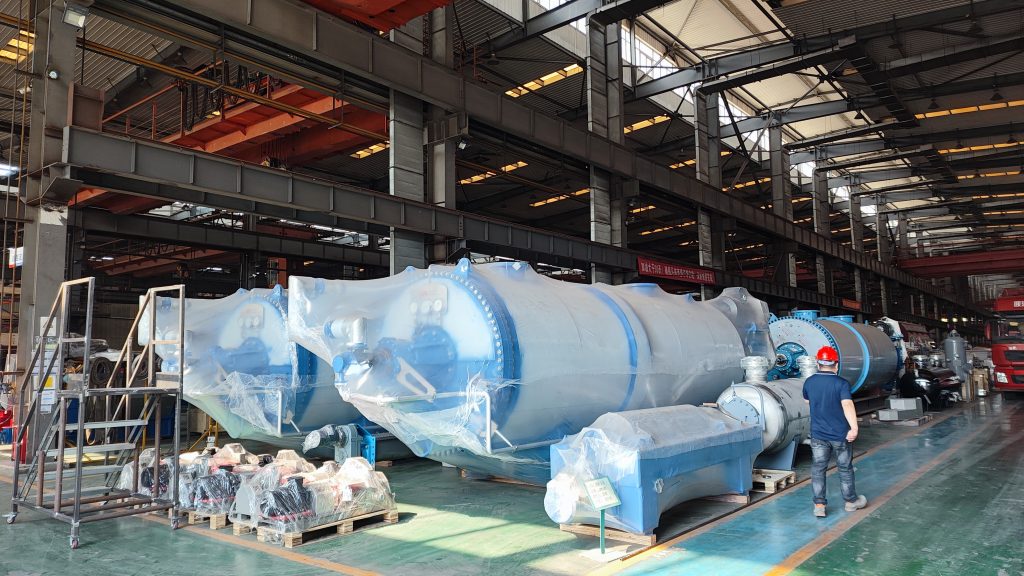
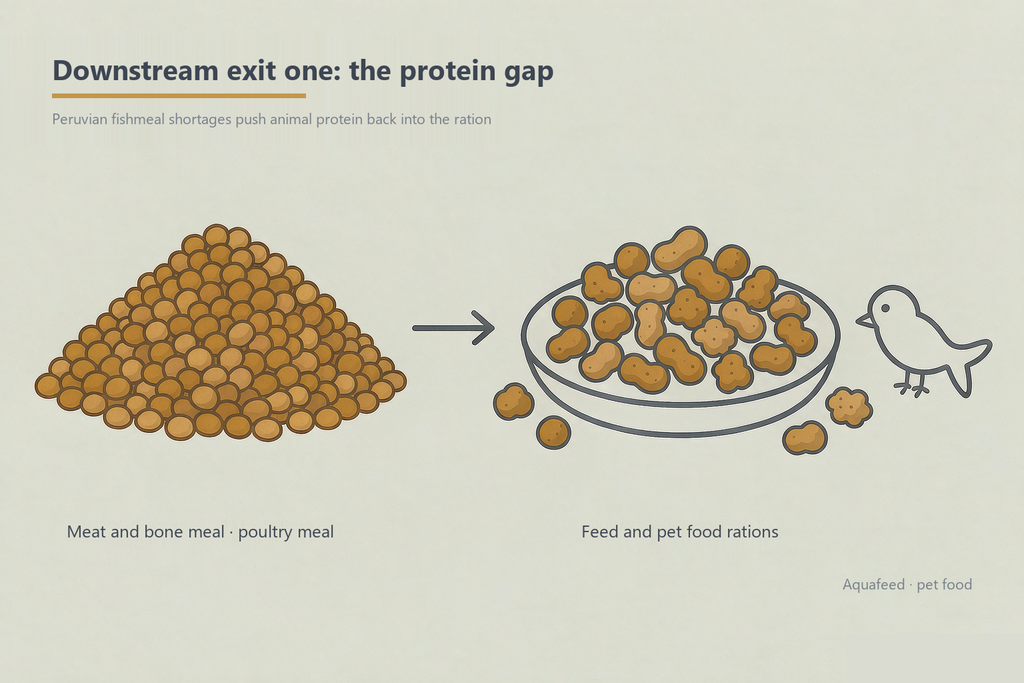
3. Downstream exit one: protein — fishmeal shortages push animal protein back into the ration
The first output stream is protein meal. Prices are published weekly, which makes this the most measurable of the three exits. USDA’s Tallow and Protein Report for the week ending 18 September 2026 priced meat and bone meal at 50% protein at $420.00 per ton, and blood meal at 85% protein at $1,570–1,575 per ton. Feathermeal, quoted on the separate by-product feedstuff report, sat in the low $300s per ton in the same period.
What is pushing buyers toward those products is substitution. At the rendering industry’s 2026 meeting in Mendoza, Argentina, Fastmarkets recorded Peruvian fishmeal with 65–66% protein at $3,325–3,375 per ton FOB, with capture repeatedly interrupted. South American feed mills responded by revaluing their protein ratios and moving toward meat and bone meal, poultry by-product meal, hydrolysed feather meal and tilapia meal.
The elasticity is not uniform, and that is where the commercial opportunity sits. Aquafeed formulators can adjust ratios freely; pet food cannot, because ingredient declarations and labelling constrain substitution. The same shortage therefore creates different margins on different downstream products. Fishmeal’s role in Asian aquaculture supply chains is covered in more depth in our analysis of fish rendering for Asian aquaculture.
4. Downstream exit two: fats — from soap stock to aviation fuel feedstock
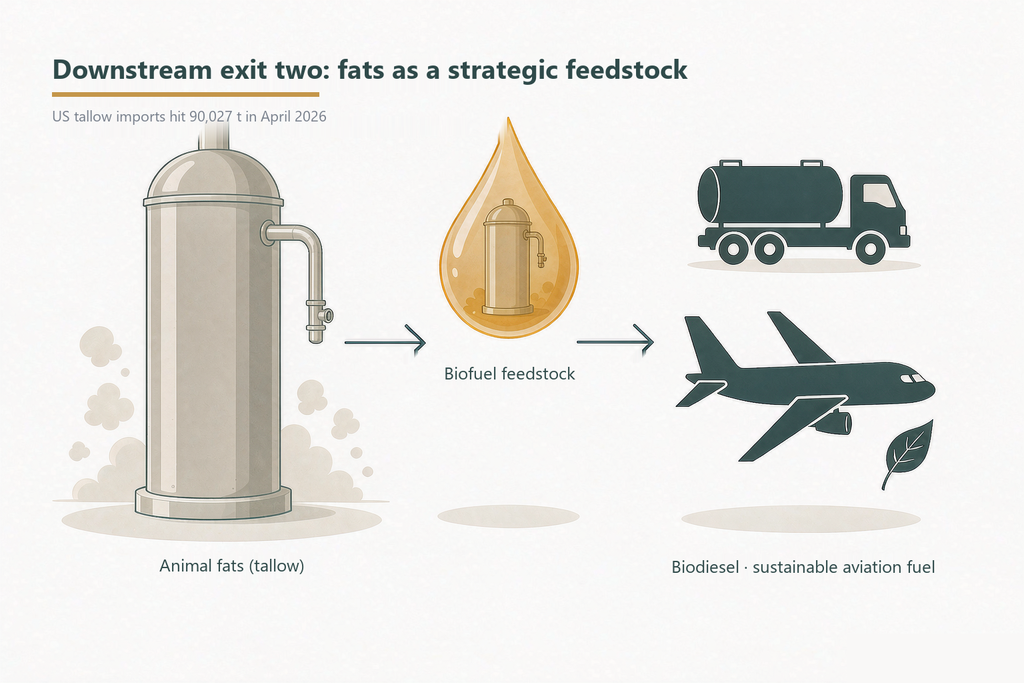
The second output stream is rendered fat, and its pricing logic was rewritten in 2026. In the week ending 10 September 2026, Fastmarkets reported European category 3 animal fats up €10–30 per tonne, with poultry fat at a maximum 2% free fatty acid content quoted at €1,200–1,220 per tonne DDP Northwest Europe — the sharpest mover in the group, because fish oil shortages pushed local feed producers toward poultry fat instead.
The structural driver is biofuel policy. The United States has moved from net exporter to net importer of tallow, taking in 90,027 tonnes of inedible tallow in April 2026 alone — close to double March’s volume. The EPA’s renewable fuel obligations for 2026–27 require biodiesel and renewable diesel output roughly 60% above 2025 levels, and tallow is projected to reach 27.5% of the US biofuel feedstock mix by 2027.
Here is the constraint that makes this a rendering question rather than an energy question. Supply cannot follow price. Tallow is a by-product of slaughter; no one slaughters more cattle to make fuel. Fastmarkets forecasts US tallow production down 4.1% in 2026/27. When the feedstock cannot expand, the only variables a processor controls are collection efficiency and fat yield per tonne of raw material — and the second is fixed in the cooker. Extraction from the cooked mass is handled downstream by the fat screw press, but the yield ceiling is already set upstream of it.
5. Downstream exit three: the EU has just opened a third exit
A third outlet emerged this year. On 21 July 2026 the European Commission notified the WTO under G/TBT/N/EU/1226 of a draft delegated regulation amending Regulation (EU) 2019/1009 on fertilising products. The amendment expands component material category 10 (CMC10) — previously limited to processed manure — to include eight further derived products, among them Category 2 meat and bone meal, Category 3 processed animal protein, Category 3 blood products, hydrolysed proteins, and di- and tricalcium phosphate. The comment period closed on 19 September 2026.
The draft attaches real conditions rather than opening a free channel: derived products must reach the fertiliser declaration within 36 months of their compliant end-point processing, must be stored away from light and moisture, and are subject to pollutant limits including total chromium at 400 mg/kg dry matter for products containing hydrolysed proteins. The full regulatory picture, including how it interacts with China’s own animal by-product rules, is set out in our review of EU and China animal by-product regulations.
Read together with the protein and fat exits, the point is that slaughterhouse waste now has three markets rather than one. That is a change in the plant’s commercial position, not just its compliance position — and it is why moving from meeting treatment standards to high-value utilisation is the more useful way to plan a line.
Frequently asked questions
Why does downstream pricing end up depending on the cooker’s operating data?
Because fat yield and residual fat content determine revenue, and both are already fixed once cooking is complete. Deviations in temperature, pressure or hold time cannot be corrected by the press, the dryer or the centrifuge.
What does upstream disease pressure mean for equipment buyers?
In the short term, higher processing volumes and stricter hygiene requirements. In the longer term, slaughter capacity consolidating into larger units. Both point the same way: the line has to run reliably at a higher sanitary standard, not just faster.
What is the most commonly overlooked part of this chain?
Record-keeping. A compliance audit examines the completeness of the sterilisation curve, not the equipment nameplate. Process records are the only evidence, produced after the fact, that a batch was compliant — which is why logging capability belongs in the specification from the start.
Conclusion
Placed back inside its value chain, slaughterhouse waste treatment equipment is not valued by what it costs to buy. It is valued by where it sits: upstream it absorbs output that farms and slaughterhouses cannot avoid, and downstream it feeds three markets — feed protein, industrial fats and fertiliser. The batch cooker and the continuous hydrolyser are two different entry points into that chain, and which one fits is an engineering question. Whether the chain is worth investing in is a market question — and it is the one worth answering first. For a sizing exercise based on your own raw material profile and intended outlets, talk to the Sunrise team.